Have We Really Discovered 6,000 Exoplanets? NASA Calls It a New Era of Exploration!
Published: 2025-09-17 22:00:00 | Category: Trump GNEWS Search
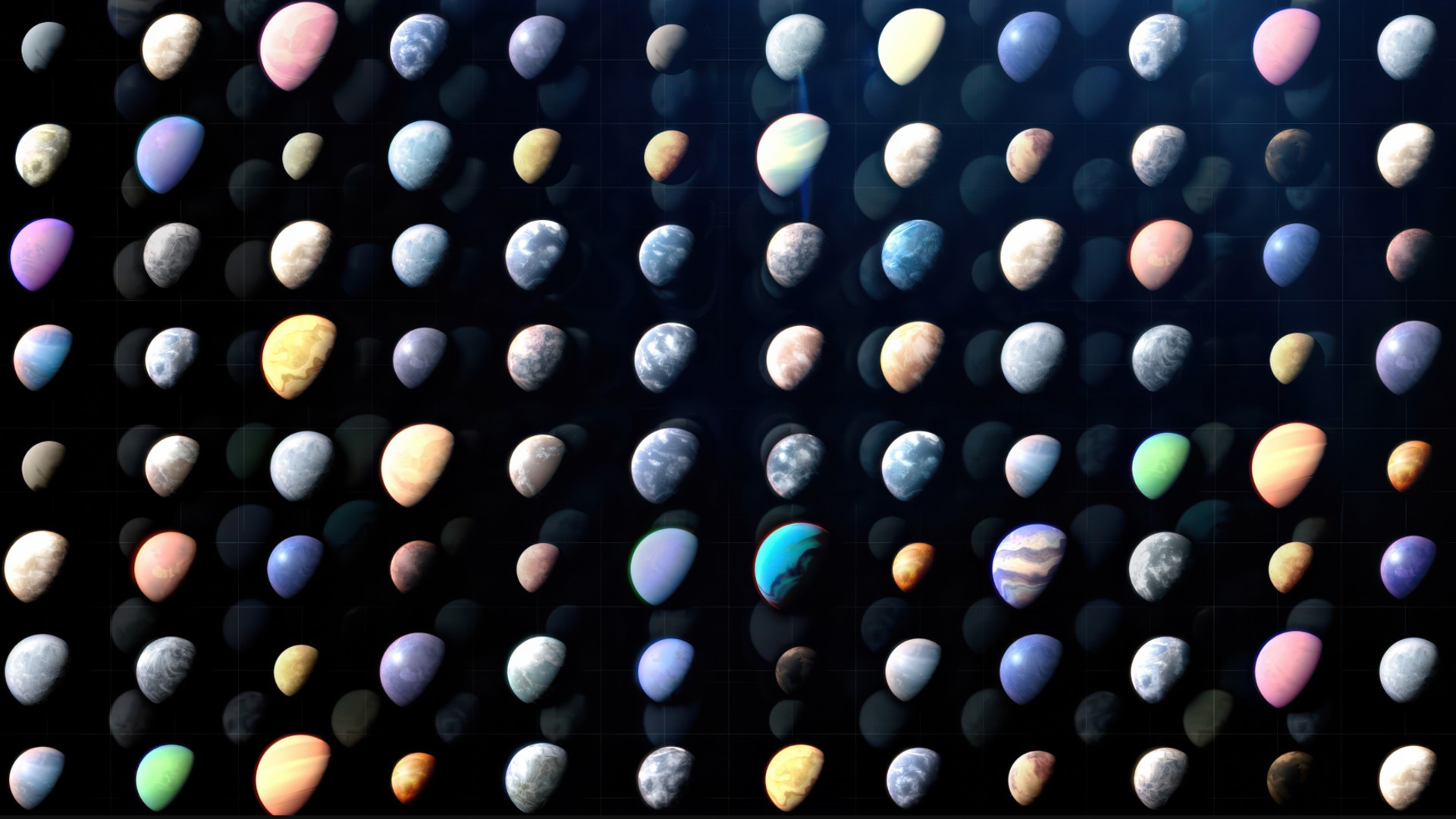
NASA has recently announced a significant milestone in the search for exoplanets, reaching a total of 6,000 confirmed planets outside our solar system. This remarkable achievement highlights the rapid pace of discovery in the past few decades, with the count increasing from 5,000 just three years ago. Scientists continue to explore the cosmos for worlds that could potentially support life, as well as to understand the vast array of planetary types that exist beyond our own celestial neighbourhood.
Last updated: 17 September 2023 (BST)
Key Takeaways
- NASA's confirmed exoplanet count has reached 6,007, with ongoing discoveries.
- The first exoplanet around a sun-like star, 51 Pegasi b, was discovered in 1995.
- NASA's TESS and the retired Kepler Space Telescope have contributed significantly to the current count.
- Exoplanets include various categories, such as gas giants, Neptune-like worlds, and terrestrial planets.
- The search for Earth-like planets continues, with billions more potentially awaiting discovery.
The Journey to 6,000 Exoplanets
The milestone of 6,000 confirmed exoplanets reflects decades of astronomical advancements and the relentless pursuit of knowledge about our universe. In just about 30 years, since the first confirmed detection of an exoplanet in 1992, scientists have catalogued an impressive number of these distant worlds. The most notable discovery came in 1995 with 51 Pegasi b, marking a turning point in our understanding of planetary systems. This gas giant, located approximately 50 light-years away, was the first exoplanet found orbiting a sun-like star, paving the way for future explorations.
The Exponential Growth of Discoveries
The growth in the exoplanet count appears exponential, especially when considering that only three years ago the total stood at 5,000. This rapid acceleration in discoveries can be attributed to advances in technology, improved observational techniques, and dedicated missions such as the Transiting Exoplanet Survey Satellite (TESS) and the now-retired Kepler Space Telescope. Together, these missions have significantly enhanced our ability to detect and confirm exoplanets.
Understanding Exoplanet Categories
The current tally of over 6,000 exoplanets includes a diverse range of types, each offering unique insights into the nature of planetary formation and the potential for life beyond Earth. According to NASA, the breakdown of these exoplanets includes:
- 2,035 Neptune-like worlds
- 1,984 gas giants
- 1,761 super-Earths
- 700 terrestrial planets
- 7 of unknown types
Neptune-like Worlds and Their Significance
Neptune-like exoplanets, which share similarities with our solar system's Neptune and Uranus, make up a significant portion of the count. These planets typically possess atmospheres dominated by hydrogen and helium, with rocky cores of heavier metals. The study of these planets is crucial for understanding the conditions under which planets can form and identifying where Earth-like planets might exist.
Gas Giants and Super-Earths
Gas giants, reminiscent of Jupiter, are another major category, revealing the diverse architectures of planetary systems. Meanwhile, super-Earths, which are slightly larger than Earth but less massive than gas giants, present exciting possibilities for habitability. While super-Earths are not necessarily Earth-like in conditions, their size could allow for the presence of atmospheres and, potentially, liquid water.
The Role of NASA's Missions in Discovery
Nasa's various missions have played a pivotal role in the exoplanet discovery process. The TESS mission, launched in 2018, has contributed significantly to the current count, with 693 confirmed exoplanets. The Kepler Space Telescope, operational from 2009 to 2018, was responsible for over 2,600 of the confirmed planets, utilising the transit method to detect planets as they passed in front of their host stars.
The Future of Exoplanet Exploration
Looking ahead, NASA's commitment to exoplanet exploration remains unwavering. The agency's Exoplanet Exploration Program aims to identify planets that could potentially support life, alongside understanding the myriad of conditions that contribute to planet formation. The search for a planet akin to Earth continues, as scientists believe that billions of undiscovered worlds may still await detection.
The Existential Implications of Finding Other Worlds
As astronomers continue to expand the boundaries of our understanding, the quest for exoplanets also raises profound existential questions. The search for a planet just like ours is a reminder that, while we've made significant progress, the universe holds many secrets yet to be uncovered. Each discovery not only adds to our knowledge of the cosmos but also deepens our understanding of our place within it.
Conclusion: What Lies Beyond Our Solar System?
The journey to 6,000 confirmed exoplanets is a testament to human curiosity and ingenuity. Each planet discovered represents not just a number, but an entire world with its own characteristics and potential for life. As we stand on the brink of the next great chapter in exploration, the future of exoplanet discovery promises to be as exciting as ever. What new worlds will we find, and could one of them be our cosmic neighbour?
FAQs
What is an exoplanet?
An exoplanet is a planet that orbits a star outside our solar system. These worlds come in various sizes and compositions, and many are discovered using advanced detection methods.
How many exoplanets have been discovered so far?
As of now, NASA has confirmed a total of 6,007 exoplanets, with many more candidates awaiting confirmation.
What methods are used to discover exoplanets?
Common methods for discovering exoplanets include the transit method, where a planet passes in front of its star, and the radial velocity method, which detects wobbles in a star's movement caused by orbiting planets.
Why is the discovery of exoplanets important?
Discovering exoplanets helps scientists understand the diversity of planetary systems, the conditions under which planets form, and the potential for life beyond Earth.
What are super-Earths?
Super-Earths are a category of exoplanets that are larger than Earth but smaller than gas giants like Neptune. They may have conditions suitable for life, depending on their atmospheres and distances from their stars.
#Exoplanets #NASA #SpaceExploration