What Do Baby Stars Look Like in a Gravitationally Torn Galaxy?
Published: 2025-09-21 06:49:31 | Category: Uncategorized
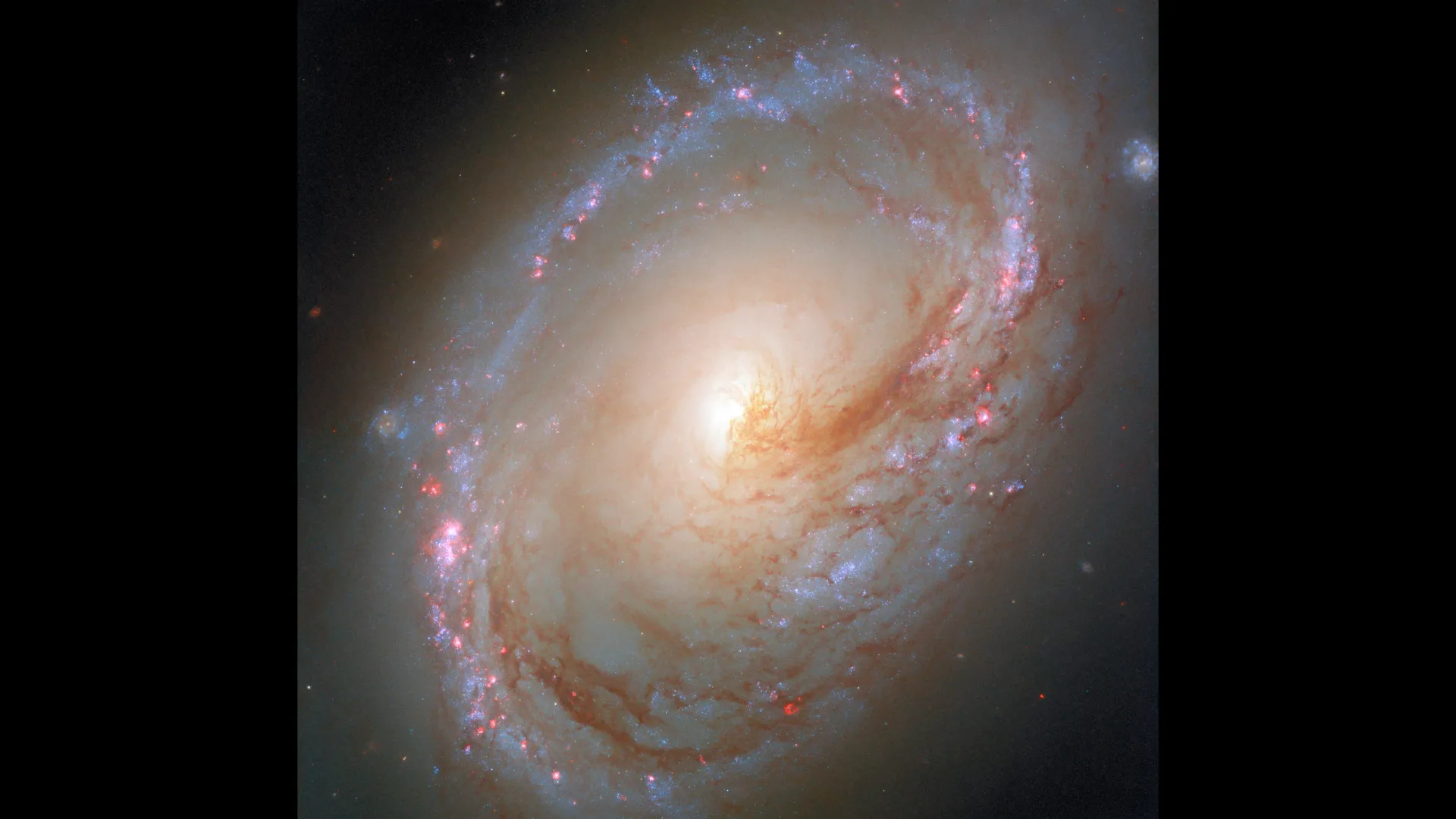
The latest Hubble image of Messier 96 reveals an asymmetric appearance of the galaxy, showcasing intricate details of star formation. This updated view incorporates ultraviolet and optical light observations, enhancing our understanding of how stars are born within dense gas clouds.
Last updated: 24 October 2023 (BST)
Overview of Messier 96
Messier 96, also known as NGC 3368, is a spiral galaxy located approximately 35 million light-years away in the constellation Leo. It is well-known among astronomers for its distinct structure and ongoing star formation processes. The latest observations from the Hubble Space Telescope offer new insights into the dynamics of star creation in this intriguing galaxy.
Key Takeaways
- New Hubble image of Messier 96 shows asymmetric features and star formation.
- Observations included ultraviolet and optical light for the first time.
- Hot, young stars are surrounded by pink gas bubbles, indicating active star birth.
- Data will help understand the relationship between dust and starlight.
- This is the third Hubble image of Messier 96, building on previous observations.
Significance of the New Hubble Image
Each iteration of Hubble's imagery contributes to a richer, more detailed understanding of Messier 96. The 2015 and 2018 images provided foundational data, but the latest capture integrates advanced observational techniques, allowing astronomers to observe the galaxy's star formation in unprecedented detail. This is crucial for comprehending how different elements of a galaxy interact during the star formation process.
Understanding Star Formation in Messier 96
Star formation in galaxies like Messier 96 typically occurs in regions rich in gas and dust. The pink gas bubbles seen in the recent image are indicative of areas where new stars are being birthed. These bubbles form when intense radiation from young, massive stars heats the surrounding gas, causing it to glow. This process is known as ionisation.
The Role of Dust in Star Formation
Dust plays a pivotal role in the life cycle of stars. It not only helps to cool the gas, allowing for the collapse necessary to form stars, but it also filters starlight. The interplay between dust and light is a critical area of study, particularly outlined by the new data from Hubble. Understanding how dust affects light can provide insights into the conditions conducive to star formation.
The Evolution of Hubble's Observations
Since its launch in 1990, the Hubble Space Telescope has transformed our understanding of the universe. Each new image of Messier 96 serves as a chapter in a growing narrative of discovery. The previous images from 2015 and 2018 laid the groundwork for this latest view, which has been enhanced with additional data capturing the nuances of star formation.
Comparison of Hubble Images Over Time
The evolution of Hubble’s observations of Messier 96 can be summarised as follows:
- 2015: Initial detailed observations highlighting the structure of the galaxy.
- 2018: Enhanced imaging techniques revealed more about the surrounding environment and star distribution.
- 2023: The latest image incorporates ultraviolet and optical light, providing a comprehensive view of star formation dynamics.
What Comes Next for Astronomers?
The new data from the Hubble Space Telescope is set to fuel ongoing research into galaxy formation and evolution. Astronomers plan to use this information to explore several key areas:
- How stars form within giant gas clouds.
- The impact of new stars on their surrounding environments.
- The influence of galactic structure on star formation rates.
As the field of astrophysics continues to evolve, the lessons learned from Messier 96 will be applicable to other galaxies and star-forming regions across the universe.
Conclusion
The latest Hubble image of Messier 96 not only enhances our visual understanding of this fascinating galaxy but also serves as a vital resource for future astronomical studies. As scientists delve deeper into the complexities of star formation, the implications of these findings will resonate across multiple areas of research. The ongoing exploration of Messier 96 exemplifies the importance of continuous observation and data collection in the pursuit of knowledge about our universe.
As we continue to observe and understand the intricacies of galaxies like Messier 96, what new discoveries await us in the cosmos? #Hubble #Messier96 #StarFormation
FAQs
What is Messier 96?
Messier 96 is a spiral galaxy located about 35 million light-years away in the constellation Leo, known for its distinct structure and ongoing star formation.
Why is the new Hubble image important?
The new Hubble image is important because it incorporates ultraviolet and optical light observations, providing a more comprehensive understanding of star formation within the galaxy.
How do stars form in Messier 96?
Stars in Messier 96 form in regions rich in gas and dust, where the intense radiation from young stars heats the surrounding gas, causing it to glow and indicating active star birth.
What role does dust play in star formation?
Dust helps cool gas, allowing it to collapse to form stars, and it also filters starlight, which affects the conditions necessary for star formation.
How has Hubble's view of Messier 96 changed over time?
Hubble's view of Messier 96 has changed with each new image, progressively revealing more about the galaxy's structure and star formation processes through enhanced observational techniques.