Is the Nuclear Power Station the Key to Winning the Election?
Published: 2025-12-12 10:00:15 | Category: sport
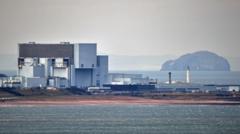
The future of nuclear power in Scotland, particularly at Torness, is becoming a pivotal issue ahead of the next Holyrood election, with contrasting views between the SNP and the Labour-led UK government. While the UK government aims for a "golden age" of nuclear energy, the SNP opposes new nuclear stations, citing a focus on renewable energy instead. This conflict not only concerns energy policy but also the local economy surrounding Torness, which is set to close in 2030, raising fears about job losses and economic impacts in Dunbar.
Last updated: 07 October 2023 (BST)
What’s happening now
The debate over nuclear power in Scotland is intensifying as the Holyrood election approaches. The UK government is advocating for new nuclear power plants as a key part of its energy strategy, while the SNP government remains staunchly opposed to new nuclear developments, preferring to invest in renewable energy sources. Torness, the last operational nuclear power station in Scotland, is at the centre of this conflict, with its impending closure in 2030 raising significant concerns about job losses and the local economy in East Lothian.
Key takeaways
- The SNP government opposes new nuclear power, favouring renewable energy solutions.
- Torness nuclear power station is set to close in 2030, risking local job losses.
- The UK government plans to fund new nuclear plants, including smaller modular reactors.
- Local leaders are calling for a replacement for Torness to protect jobs and the economy.
- The energy debate is pivotal as Scotland prepares for the upcoming Holyrood election.
Timeline: how we got here
The following timeline outlines key events and developments in the ongoing nuclear power debate in Scotland:
- 2017: The Scottish government blocks fracking for shale gas, indicating its stance on energy policy.
- 2020: The Scottish government publishes a draft energy strategy focusing on renewables.
- 2023: The UK government announces plans to fund new nuclear power plants, including smaller modular reactors.
- 2026: Great British Energy Nuclear to report on potential nuclear sites, with Torness in consideration.
- 2030: Scheduled closure of Torness nuclear power station.
What’s new vs what’s known
New today/this week
Recent discussions around Torness highlight the urgency of the nuclear energy debate as local leaders seek to ensure job protection and economic stability in the face of the power station's closure. The Scottish government reiterates its commitment to renewable energy, while UK ministers push for nuclear as a necessary component of the energy mix.
What was already established
The Scottish government has maintained a consistent policy against new nuclear developments, citing safety, cost, and waste management concerns. The local community has mixed feelings about nuclear energy, with some advocating for its potential job benefits while others raise environmental and economic critiques.
Impact for the UK
Consumers and households
For consumers in Scotland, the ongoing debate over energy generation is crucial as it directly impacts energy prices and availability. With some of the highest energy prices in the world, the cost of living crisis is exacerbated by energy policy decisions. The closure of Torness without a replacement could lead to higher electricity prices and shortages, affecting household budgets.
Businesses and jobs
The potential closure of Torness is a significant concern for local businesses in Dunbar, which rely on the power plant for employment and economic activity. The loss of jobs at Torness, which directly employs approximately 550 staff and supports many contractors, could lead to economic downturns in the area, as local shops and services depend on the influx of workers during maintenance periods.
Policy and regulation
Energy policy remains a reserved matter for Westminster, but the SNP's control over planning laws allows them to effectively block new nuclear developments in Scotland. This raises questions about the future energy landscape, especially if political power shifts in the next Holyrood election, potentially altering the current stance against nuclear energy.
Numbers that matter
- 550: Direct jobs at Torness nuclear power station.
- 1,000: Peak number of workers during maintenance periods at Torness.
- 2030: Scheduled closure year of Torness nuclear power station.
- £60: Estimated average monthly increase in energy bills due to rising electricity costs.
- 6 million: Number of homes that could be powered by the Berwick Bank wind farm.
Definitions and jargon buster
- Nuclear Power: Energy produced through nuclear reactions, which can be used to generate electricity.
- Renewable Energy: Energy derived from natural processes that are continuously replenished, such as solar, wind, and hydroelectric power.
- Modular Reactors: Smaller, factory-built reactors that can be assembled on-site and are designed to be more flexible and cost-effective.
- Baseload Power: The minimum level of demand on an electrical grid over a span of time, which nuclear power is often used to supply.
How to think about the next steps
Near term (0–4 weeks)
In the immediate future, local leaders in East Lothian will likely continue advocating for a comprehensive assessment of the Torness site, exploring possibilities for future energy generation and job retention. Community discussions on energy policy will intensify as the Holyrood election approaches, with a focus on local economic stability.
Medium term (1–6 months)
As the UK government advances its nuclear plans, there may be further announcements regarding potential sites for new nuclear developments. The outcome of the Holyrood election in May 2024 could drastically change the energy landscape in Scotland, depending on whether the SNP or a different party gains power.
Signals to watch
- Updates on the status of the Torness power station and any studies commissioned for future energy options.
- Local government responses to UK government energy policies and potential consultations with communities.
- Progress reports on the Berwick Bank wind farm and other renewable projects in the area.
Practical guidance
Do
- Stay informed about local developments regarding energy policy and the future of Torness.
- Engage with community discussions and consultations related to energy generation.
- Consider the implications of energy policy on household budgets and local employment.
Don’t
- Assume that the closure of Torness will not have immediate economic impacts on the community.
- Disregard the importance of both nuclear and renewable energy in the overall energy strategy.
- Ignore potential opportunities for job retraining or shifts in local employment sectors.
Checklist
- Review local council communications regarding energy policy.
- Participate in community meetings on the future of Torness and energy strategy.
- Assess how energy costs are affecting personal finances.
- Stay updated on national energy policy developments from the UK government.
- Explore renewable energy options for personal or community use.
Risks, caveats, and uncertainties
The debate over nuclear power in Scotland is fraught with uncertainties, particularly regarding public opinion and political outcomes. The potential for a shift in government following the Holyrood election could alter the current stance on nuclear energy, while ongoing concerns about safety, waste management, and costs could hinder new developments. Additionally, the feasibility of renewable energy solutions in replacing the baseload power provided by nuclear remains a contentious issue, especially during periods of low energy generation.
Bottom line
The future of nuclear power in Scotland, particularly at Torness, is set against a backdrop of economic concerns and political division. As the Holyrood election approaches, the community must grapple with the potential job losses and economic impacts associated with the power station's closure, while also considering the broader implications of energy policy on household budgets and local businesses.
FAQs
What is the future of Torness nuclear power station?
Torness nuclear power station is scheduled to close in 2030, leading to concerns about job losses and economic impacts in the local community of Dunbar.
Why does the SNP oppose new nuclear power stations?
The SNP opposes new nuclear power stations primarily due to concerns over costs, safety, and nuclear waste management, preferring to focus on renewable energy sources.
What are the implications of the UK government's nuclear plans?
The UK government's plans for new nuclear power plants could impact energy prices and availability in Scotland, particularly if Torness is not replaced, further complicating the energy landscape.