Are Thousands Fleeing DR Congo Violence Facing Dire Conditions in Burundi?
Published: 2025-12-23 18:00:28 | Category: world
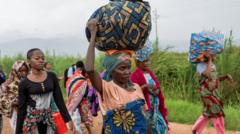
The humanitarian crisis in Burundi has worsened as nearly 90,000 refugees from eastern Democratic Republic of Congo (DRC) seek asylum following violent clashes involving the M23 rebel group. These refugees face dire living conditions in overcrowded camps, where access to food and clean water is severely limited. Aid agencies, including Médecins Sans Frontières (MSF), warn of an impending health crisis amid reports of malnutrition and the risk of disease outbreaks.
Last updated: 18 October 2023 (BST)
What’s happening now
The recent escalation of violence in eastern DRC has forced over 500,000 people from their homes, with many now seeking refuge in Burundi. The city of Uvira, located near the Burundi border, has witnessed significant fighting, leading to a surge in the number of displaced individuals. Humanitarian organisations highlight that women and children, particularly pregnant women, are among the most affected, with reports of families going without food for days.
Key takeaways
- Almost 90,000 refugees have fled to Burundi due to violence in eastern DRC.
- MSF reports treating around 200 patients daily at refugee camps.
- The UN's World Food Programme (WFP) is providing aid to over 210,000 vulnerable people.
- Concerns are growing over health risks, including cholera and malaria outbreaks.
- The situation remains fluid, with conflicting reports regarding the M23's withdrawal from Uvira.
Timeline: how we got here
The crisis in eastern DRC has deep roots but has significantly escalated since early December 2022. Key events include:
- 1 December 2022: Increased clashes in South Kivu province prompt mass displacements.
- 1 October 2023: M23 rebels capture Uvira, exacerbating the humanitarian crisis.
- 7 October 2023: Reports emerge of M23's withdrawal from Uvira, although this is disputed by Congolese authorities.
- 15 October 2023: MSF and WFP ramp up emergency aid efforts amidst worsening conditions.
What’s new vs what’s known
New today/this week
Recent reports indicate that the humanitarian situation is deteriorating rapidly, with MSF noting a significant increase in patients requiring assistance. The WFP has also announced plans to extend aid to additional displaced individuals in the region.
What was already established
Prior to these developments, the region had been grappling with violence linked to various armed factions, including the M23 rebels. The ongoing instability has led to a prolonged humanitarian crisis, with many families relying on external aid for survival.
Impact for the UK
Consumers and households
The situation could influence UK policy discussions regarding foreign aid and humanitarian assistance, particularly in relation to crisis response in Africa. Increased awareness may lead to calls for more substantial support for refugee programmes.
Businesses and jobs
UK businesses engaged in international development may find new opportunities for collaboration with NGOs focused on the crisis, particularly in health and food security sectors.
Policy and regulation
As the UK government continues to assess its foreign aid strategy, the situation in Burundi and eastern DRC may prompt a review of existing policies and funding allocations for humanitarian assistance in conflict zones.
Numbers that matter
- 90,000: Estimated number of refugees who have fled to Burundi since the recent violence began.
- 500,000: Individuals displaced within South Kivu province since December 2022.
- 210,000: People receiving life-saving aid from the WFP.
- 200: Average number of patients treated daily by MSF in refugee camps.
- 71,000: New Congolese arrivals being supported with hot meals in transit centres.
Definitions and jargon buster
- M23: A rebel group in eastern DRC, originally formed in 2012, accused of committing human rights abuses.
- MSF: Médecins Sans Frontières (Doctors Without Borders), an international humanitarian medical organisation.
- WFP: United Nations World Food Programme, the food assistance branch of the UN, addressing hunger and promoting food security.
- UNHCR: United Nations High Commissioner for Refugees, responsible for protecting refugees and stateless persons.
How to think about the next steps
Near term (0–4 weeks)
In the immediate future, humanitarian agencies are likely to intensify their aid efforts to address the urgent needs of refugees. Monitoring the health situation will be crucial to prevent outbreaks of disease.
Medium term (1–6 months)
As the situation stabilises, efforts may shift towards long-term solutions for refugees, including integration into local communities and support for sustainable livelihoods.
Signals to watch
- Updates from MSF and WFP regarding the health and nutrition status of refugees.
- Developments in peace negotiations involving the M23 and Congolese authorities.
- Changes in funding and support from international donors to aid organisations working in the region.
Practical guidance
Do
- Support reputable charities that provide aid to refugees and displaced persons.
- Stay informed about the situation through credible news sources.
- Advocate for increased government support for international humanitarian efforts.
Don’t
- Do not underestimate the severity of the humanitarian crisis.
- Avoid spreading misinformation about the conflict and refugee situation.
- Do not ignore calls for funding and resources from aid agencies.
Checklist
- Review reputable charities to support the humanitarian response.
- Follow updates from international organisations working in Burundi.
- Engage with local community efforts to raise awareness about the crisis.
- Monitor UK policy changes related to humanitarian aid funding.
Risks, caveats, and uncertainties
The situation remains volatile, with ongoing conflicts and potential for further escalations affecting humanitarian access. Reports of the M23's withdrawal from Uvira are contested, and the stability of the region is uncertain. Aid agencies face challenges related to funding and resource allocation, which could hinder their ability to respond effectively to the crisis.
Bottom line
The humanitarian crisis in Burundi, driven by violence in eastern DRC, presents an urgent challenge for aid organisations and international stakeholders. Immediate support is essential to address the needs of refugees, particularly vulnerable groups such as women and children. The situation will require sustained attention and response from both local and international communities.
FAQs
What is the current situation for refugees in Burundi?
The nearly 90,000 refugees from eastern DRC face overcrowded camps with limited food and water access, prompting urgent humanitarian aid efforts.
How many people have been displaced by the violence in eastern DRC?
Over 500,000 people have been displaced within South Kivu province since early December 2022 due to ongoing violence and conflict.
What are the main health risks for refugees in Burundi?
Refugees are at risk of severe malnutrition and epidemic diseases such as cholera and malaria, particularly among vulnerable populations like children and pregnant women.