Should You Trust AI for Tide Advice Before Your Festive Swim?
Published: 2025-12-26 08:00:11 | Category: wales
As thousands prepare for festive swims around the UK, it's essential to recognise the potential pitfalls of relying on AI tools for crucial information, such as tide times. Recent incidents, including two individuals stranded on Sully Island due to incorrect data provided by ChatGPT, highlight the risks involved. The Maritime and Coastguard Agency has issued warnings about the limitations of AI, emphasising that verified, reliable resources should be prioritised when planning outdoor activities.
Last updated: 01 December 2023 (BST)
What’s happening now
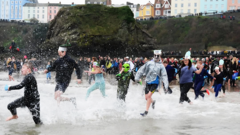
This festive season, many individuals will engage in organised swims across the UK, a tradition that has endured for decades. However, recent events have prompted the Maritime and Coastguard Agency to caution against the uncritical use of AI tools for outdoor planning. The agency's warning follows a rescue operation for two men who relied on ChatGPT to determine the tide times for Sully Island, which led to their being stranded. This incident serves as a stark reminder of the importance of utilising verified sources for crucial information regarding safety in outdoor activities.
Key takeaways
- Two men were rescued after using incorrect tide information from ChatGPT.
- Maritime and Coastguard Agency warns against relying solely on AI for outdoor planning.
- AI tools can provide useful information but may lack accuracy for specific locations.
- Experts advise consulting local knowledge and verified resources for crucial safety data.
- Organised events have safety measures in place, unlike unsupported individual activities.
Timeline: how we got here
Throughout December, as the festive swimming season begins, incidents have raised concerns about the reliability of AI tools. Notably, on 30 November 2023, two men were rescued after being stranded due to incorrect tide information from ChatGPT. This event coincided with ongoing discussions among tech leaders, including Alphabet's Sundar Pichai, about the inherent limitations of AI models and the necessity of cross-verifying information from multiple sources.
What’s new vs what’s known
New today/this week
The recent rescue of two individuals stranded on Sully Island has brought attention to the potential dangers of relying on AI for important outdoor activity information. The Maritime and Coastguard Agency has reiterated its message about the importance of using verified resources, particularly for safety-related queries.
What was already established
Prior to these incidents, it was well-known that AI models, including ChatGPT, can generate erroneous information based on their data sources. Experts have consistently advised against using AI as the sole source for critical information, especially when safety is at stake. The nature of AI's data processing can lead to inaccuracies, particularly with structured data like tide tables.
Impact for the UK
Consumers and households
The reliance on AI-generated information poses risks for individuals planning aquatic activities, particularly in tidal areas. Erroneous tide information can lead to dangerous situations, as evidenced by the recent stranding incident. Households planning recreational outings should ensure they consult verified resources, such as the UK Hydrographic Office's Easy Tide service, to avoid similar mishaps.
Businesses and jobs
For businesses involved in outdoor recreation, such as organised swimming events, the emphasis on safety can lead to increased demand for trained professionals and rescue services. Companies may need to invest more in safety measures and public education about the limitations of AI tools. This could lead to growth in sectors related to outdoor safety and emergency response.
Policy and regulation
The events surrounding the misuse of AI tools in outdoor planning may prompt discussions about regulatory measures concerning AI accuracy and reliability, particularly in critical domains like safety and navigation. Policymakers may consider guidelines to educate users on the limitations of AI and encourage the use of established resources for planning outdoor activities.
Numbers that matter
- 2 hours: The incorrect tide time provided by ChatGPT led to a two-hour discrepancy, resulting in the individuals being stranded.
- 60 mph: Wind speeds reported on the day of a separate rescue operation for walkers who relied on AI for weather information.
- 50 years: Combined experience of rescue team leaders who emphasised the importance of local knowledge and experience.
- 1: The unique role of professional resources, like the RNLI and St John Ambulance, in organised swimming events.
- 10+ years: The history of AI development, which still struggles with accurately interpreting structured data like tables.
Definitions and jargon buster
- AI (Artificial Intelligence): Technology that simulates human intelligence, often used for data processing and analysis.
- HM Coastguard: The agency responsible for maritime safety in the UK, providing rescue and safety services.
- RNLI (Royal National Lifeboat Institution): A charity that provides lifesaving services at sea, including rescue operations.
- Hydrographic Office: The UK government agency responsible for surveying and mapping the seas and waterways.
How to think about the next steps
Near term (0–4 weeks)
In the immediate term, individuals engaging in outdoor activities should verify tide times and weather conditions through established resources rather than relying on AI. This includes consulting local experts or using government services for accurate information.
Medium term (1–6 months)
Over the next several months, stakeholders in outdoor recreation should consider developing educational campaigns to raise awareness about the limitations of AI tools in safety-critical situations. This could involve collaboration with local authorities and emergency services to promote best practices.
Signals to watch
- Monitoring rescue incidents related to AI misuse could reveal trends in outdoor safety mishaps.
- Watch for potential regulatory discussions on AI accuracy and safety, particularly in navigational contexts.
- Increased public awareness campaigns regarding the importance of verified information sources.
Practical guidance
Do
- Always verify tide times and weather conditions using reliable resources.
- Consult local experts and experienced individuals when planning outdoor activities.
- Utilise AI for tasks that can be verified, such as drafting communications or gathering general information.
Don’t
- Don’t rely solely on AI for critical safety information.
- Don’t overlook the importance of local knowledge and expertise when planning outings.
- Don’t ignore weather warnings or conditions, especially when engaging in outdoor activities.
Checklist
- Double-check tide and weather information from reliable online services.
- Ensure you have emergency contact numbers for local rescue services.
- Review safety equipment and preparedness before heading out.
- Consider joining organised events where safety measures are in place.
- Stay informed about local conditions and speak to those with experience in the area.
Risks, caveats, and uncertainties
While AI tools have the potential to assist in various tasks, their limitations must be acknowledged, especially regarding factual accuracy. Users should be aware that AI can produce incorrect or misleading information, particularly when interpreting structured data. As such, it is crucial to cross-verify any critical information obtained from AI sources with established references, especially in safety contexts.
Bottom line
As the festive swimming season approaches, the reliance on verified resources over AI tools for crucial information is more important than ever. While AI can enhance planning processes, it is not a substitute for human expertise and local knowledge. Ensuring safety during outdoor activities requires diligence and the use of trusted resources.
FAQs
Can AI be trusted for outdoor planning?
While AI can provide useful information, it is crucial to verify any critical data, such as tide times, with established sources to ensure safety during outdoor activities.
What should I do if I get stranded while swimming or hiking?
If you find yourself stranded, contacting local rescue services or using emergency communication devices to get help is essential. Always have a plan for such situations before heading out.
How can I ensure my outdoor activities are safe?
Consult reliable resources for weather and tide information, seek local expertise, and participate in organised events where safety measures are in place to ensure a safer experience.