How Are Poachers Threatening China's Rare Songbirds?
Published: 2025-12-29 00:00:34 | Category: technology
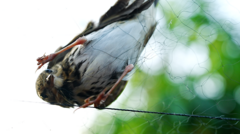
In the battle against wildlife poaching in China, Silva Gu stands as a solitary guardian for migratory birds, risking his life to protect these creatures from illegal capture and trade. With his unwavering dedication, he seeks to halt the annual slaughter of tens of thousands of songbirds, driven by a lucrative black market that exploits both the economy and a deep-seated cultural tradition. Silva's journey reflects the broader struggle for conservation in a changing China, where urbanisation and economic pressures threaten biodiversity.
Last updated: 05 October 2023 (BST)
What’s happening now
Silva Gu has emerged as a pivotal figure in the fight against the illegal songbird trade in Beijing, China. His efforts to detain poachers and rescue trapped birds highlight a growing awareness of wildlife conservation issues within the country. This comes at a critical time, as the economic downturn has pushed many to resort to poaching as a means of survival. Silva's work is not just about saving birds; it's an endeavour to shift public attitudes towards wildlife conservation in a rapidly urbanising society.
Key takeaways
- Silva Gu is dedicated to rescuing migratory birds from poachers in Beijing.
- The illegal songbird trade is driven by high profits and cultural traditions.
- Silva founded the Beijing Migratory Bird Squad to advocate for the protection of birds.
- Despite challenges, there is a growing shift in public and governmental attitudes towards wildlife conservation in China.
- Silva has rescued over 20,000 birds in his decade-long campaign.
Timeline: how we got here
The issue of wildlife poaching in China has evolved significantly over the years. Here’s a brief timeline of key events related to this crisis:
- 1990s: Silva Gu grows up exploring Beijing's grasslands, fostering a love for birds.
- 2000s: Rapid urbanisation begins to destroy habitats, leading to a decline in bird populations.
- 2015: Silva starts actively working against bird poaching after seeing the lack of enforcement.
- 2020: COVID-19 pandemic raises awareness around wildlife trade and its risks.
- 2023: Increasing police collaboration with conservationists, highlighting a shift in governmental attitudes.
What’s new vs what’s known
New today/this week
Recent reports indicate that law enforcement in Beijing is intensifying efforts to combat wildlife poaching, with more proactive measures being taken to disrupt illegal trading networks. Silva Gu's recent arrest of a poacher is emblematic of this emerging collaboration.
What was already established
It is well-documented that the illegal wildlife trade, especially in songbirds, has deep historical roots in Chinese culture, where owning a bird is seen as a status symbol. The economic downturn has exacerbated the problem, pushing individuals towards poaching as a means of income.
Impact for the UK
Consumers and households
While the immediate impact of China's poaching crisis may seem distant for UK consumers, the global wildlife trade has ramifications for biodiversity and ecosystem health worldwide. The demand for exotic pets, including songbirds, can influence illegal trade routes that extend into Europe and beyond.
Businesses and jobs
For businesses involved in wildlife conservation and eco-tourism, a decrease in bird populations can diminish potential revenue. Additionally, the poaching crisis raises accountability issues for companies operating in international wildlife trade, necessitating compliance with stricter regulations.
Policy and regulation
Recent discussions in the UK regarding wildlife protection may be influenced by international efforts, such as those seen in China. As conservationists advocate for stricter enforcement of wildlife laws, UK policy may evolve to more robustly address illegal wildlife trade.
Numbers that matter
- £210: Average price of a Siberian rubythroat on the black market in China.
- 20,000: Number of birds rescued by Silva Gu in his decade-long efforts.
- 13: Number of suspects arrested in a large poaching ring in Dalian in 2023.
- 12,000: Number of yellow-breasted buntings seized by police in a single operation.
- 13%: Proportion of global bird species found in China, highlighting its biodiversity significance.
Definitions and jargon buster
- Mist nets: Fine mesh nets used to capture birds without visible obstruction.
- Indicator species: Species whose presence, absence, or abundance reflects the health of the ecosystem.
- Wildlife trade: The buying and selling of animals and plants, both legal and illegal, often for pets or food.
How to think about the next steps
Near term (0–4 weeks)
In the coming weeks, efforts to enforce wildlife protection laws in China are expected to increase. Monitoring of known poaching hotspots will be critical to preventing further illegal captures.
Medium term (1–6 months)
As the government continues to address wildlife trade issues, public education campaigns may emerge, aimed at changing consumer attitudes toward pet ownership and conservation. International collaborations are also likely to develop.
Signals to watch
- Increased arrests of poachers and traders in China.
- Public response to wildlife conservation campaigns.
- Changes in legislation regarding wildlife trade in both China and the UK.
Practical guidance
Do
- Support wildlife conservation organisations through donations or volunteering.
- Educate yourself and others about the importance of protecting biodiversity.
- Report suspicious wildlife trading activities to local authorities.
Don’t
- Purchase wildlife as pets without understanding the ecological impact.
- Engage with markets that deal in illegal wildlife products.
- Assume that local wildlife laws are enforced without checking for compliance.
Checklist
- Research about local wildlife laws and protections.
- Stay informed about conservation efforts and how to contribute.
- Engage in discussions about biodiversity and its importance.
- Support local wildlife sanctuaries and rehabilitation centres.
- Follow credible news sources for updates on wildlife conservation policies.
Risks, caveats, and uncertainties
While efforts to combat wildlife poaching in China are gaining traction, there remain significant challenges. Enforcement of laws can be sporadic, and the penalties for poachers often do not deter illegal activities. Additionally, the cultural significance of bird ownership complicates conservation efforts, as many do not recognise the ecological impact of their actions. As such, public education and consistent enforcement will be crucial for long-term success.
Bottom line
Silva Gu’s relentless pursuit of justice for migratory birds in China illustrates the complex intersection of culture, economy, and conservation. As China grapples with its wildlife trade issues, the future of its songbirds hangs in the balance. Greater public awareness and enforcement efforts will be necessary to shift attitudes and protect these vital species for generations to come.
FAQs
What is Silva Gu doing to protect birds?
Silva Gu works tirelessly to rescue migratory birds from poachers, using his own resources to fund his efforts and collaborating with local police to enforce wildlife laws.
Why is the illegal songbird trade a problem in China?
The illegal songbird trade threatens biodiversity and leads to the decline of bird populations, driven by cultural traditions and economic pressures that encourage poaching.
What can individuals do to help in wildlife conservation?
Individuals can support wildlife conservation efforts by donating to organisations, educating themselves and others about biodiversity, and reporting illegal wildlife trade activities.