Will 2026 Be the Best Year for Northern Lights?
Published: 2025-12-29 02:00:08 | Category: technology
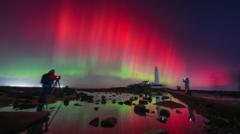
The Northern Lights, also known as the Aurora Borealis, have become increasingly visible across the UK, with spectacular displays reported in locations such as Northumberland. In November 2025, a significant solar flare resulted in one of the year's best displays, illuminating the night skies. With a peak solar cycle expected in 2026, UK residents can anticipate more opportunities to witness this stunning natural phenomenon in the near future.
Last updated: 05 October 2023 (BST)
What’s happening now
As the solar cycle progresses, the UK is poised for an exciting period of increased visibility of the Northern Lights. Following a series of solar flares in 2025, including a significant event on 11 November, forecasts indicate that similar displays will be possible throughout 2026. This period is particularly promising for skywatchers, as solar activity remains relatively high, despite predictions for a solar minimum around 2031-32. Enhanced monitoring technology and improved forecasting methods mean that more people can now capture and share their experiences of the Aurora Borealis.
Key takeaways
- The Northern Lights have been increasingly visible in the UK, especially in 2025.
- A major solar flare on 11 November 2025 contributed to a spectacular display.
- Solar activity is expected to remain high in 2026, offering more chances to see the aurora.
Timeline: how we got here
Understanding how we arrived at this point requires a look at the recent solar activity and its implications for aurora sightings in the UK:
- October 2024: NASA confirms the peak of the current solar cycle, leading to increased sunspots and solar activity.
- 11 November 2025: An X5.1 solar flare erupts, sending a large amount of energy toward Earth and resulting in visible Northern Lights across the UK.
- 2026: Continued high solar activity is expected, providing more opportunities for aurora sightings.
- 2031-32: Anticipated solar minimum, though significant events may still occur.
What’s new vs what’s known
New today/this week
Recent reports highlight that the Northern Lights were visible in areas previously not known for aurora sightings, such as southern England. This change is largely attributed to significant solar events, including the recent solar flare in November 2025.
What was already established
The Northern Lights have been a subject of fascination for centuries, traditionally visible in northern latitudes. However, advancements in technology have allowed for better predictions and sightings in the UK, particularly during solar peaks.
Impact for the UK
Consumers and households
The increased visibility of the Northern Lights can enhance tourism, particularly in areas like Northumberland and Scotland, where visitors may flock to experience the phenomenon. This influx can positively impact local economies, encouraging spending in hospitality and related sectors.
Businesses and jobs
Businesses involved in tourism, photography, and outdoor activities stand to benefit from the aurora's visibility. More opportunities for jobs in these sectors may arise as interest in aurora-related experiences grows.
Policy and regulation
While there are currently no specific policies directly related to aurora sightings, increased public interest could lead to initiatives aimed at promoting dark sky areas and protecting natural vistas from light pollution, enhancing the experience for skywatchers.
Numbers that matter
- X5.1: The intensity rating of the solar flare observed on 11 November 2025.
- 11 years: The solar cycle duration, with peaks and troughs in activity.
- 2031-32: Expected timing for the next solar minimum.
- More than 100: The number of sightings reported across various locations in the UK during significant solar events.
Definitions and jargon buster
- Aurora Borealis: A natural light display predominantly seen in high-latitude regions, caused by the interaction between solar particles and Earth's magnetic field.
- Solar flare: A sudden eruption of intense high-energy radiation from the sun's surface.
- Coronal mass ejection: A significant release of plasma and magnetic field from the solar corona into space.
- Russell-McPherron effect: A phenomenon that increases the likelihood of auroral activity around the equinoxes.
How to think about the next steps
Near term (0–4 weeks)
Skywatchers should remain vigilant for solar activity updates, as even minor flares can lead to aurora sightings. Planning trips to dark sky areas will enhance chances of viewing the lights.
Medium term (1–6 months)
As solar activity remains elevated, the likelihood of more aurora displays increases. Engaging with local astronomy groups or social media can provide timely alerts on potential sightings.
Signals to watch
- Solar flare alerts and forecasts from agencies like NASA and the Met Office.
- Reports from local skywatchers on aurora sightings across the UK.
- Changes in solar wind speeds and directions as observed by satellites.
Practical guidance
Do
- Check aurora forecasts regularly, especially during peak solar activity.
- Find dark sky locations away from city lights for the best viewing experience.
- Bring a camera with a tripod to capture the Northern Lights effectively.
Don’t
- Don’t rely solely on social media for aurora sightings; verify with trusted sources.
- Don’t forget to dress warmly, as aurora viewing often occurs in cold conditions.
- Don’t use flash photography, as it can wash out the colours of the aurora.
Checklist
- Check weather conditions to ensure clear skies.
- Have a fully charged phone or camera ready for photos.
- Research the best local spots for aurora viewing.
- Plan your outing around the new moon for darker skies.
- Bring equipment for comfort, such as blankets or hot drinks.
Risks, caveats, and uncertainties
While solar activity can lead to increased aurora sightings, it is not guaranteed. Weather conditions, light pollution, and geographic location all play critical roles in visibility. Furthermore, solar events can vary significantly in intensity, and not every solar flare will result in an aurora display. It is essential to remain informed and understand that sightings may still be limited in some areas.
Bottom line
The Northern Lights are increasingly becoming a breathtaking reality for many across the UK, particularly with heightened solar activity anticipated in 2026. For those looking to catch a glimpse, staying informed about solar events and choosing optimal viewing locations can enhance the experience. The blend of scientific understanding, advanced technology, and community engagement makes aurora sightings more accessible than ever before.
FAQs
What causes the Northern Lights?
The Northern Lights are caused by solar particles interacting with Earth's magnetic field, resulting in stunning light displays in the atmosphere.
When is the best time to see the Northern Lights in the UK?
The best times to see the Northern Lights in the UK are typically during the autumn and spring equinoxes, as well as during periods of high solar activity.
How can I photograph the Northern Lights?
To photograph the Northern Lights, use a camera with manual settings, a tripod for stability, and avoid using flash. Long exposure settings will capture the vibrant colours effectively.