Will the US $2 Billion Humanitarian Aid Push Force the UN to Adapt?
Published: 2025-12-29 19:00:16 | Category: world
The United States has recently pledged $2 billion (£1.5 billion) to fund United Nations (UN) humanitarian programmes, amidst a backdrop of significant cuts in funding for global humanitarian operations. This announcement highlights a shift in US aid strategy and raises concerns about the future of humanitarian assistance, particularly as the funding comes with specific conditions that may undermine established humanitarian principles.
Last updated: 26 October 2023 (BST)
What’s happening now
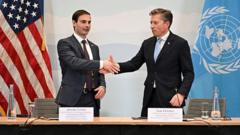
The US administration, represented by Jeremy Lewin, President Trump's Under Secretary for Foreign Assistance, has made a significant financial commitment to the UN. However, this funding comes at a time of tightening budgets for humanitarian assistance, with the US traditionally being one of the largest contributors. In 2022, the US spent approximately $17 billion (£12.6 billion) on humanitarian efforts, indicating that the current pledge is a substantial reduction.
Moreover, while the UN welcomed the new funding, concerns have arisen regarding the stringent conditions attached. Countries like Haiti, Syria, and Sudan are prioritised for aid, while nations such as Afghanistan and Yemen are notably excluded. This exclusion stems from allegations regarding the diversion of funds to terrorist groups, particularly in Afghanistan, and reflects a growing trend of politicising humanitarian aid.
Key takeaways
- The US has pledged $2 billion for UN humanitarian programmes, a significant decrease from previous years.
- Funding is earmarked for 17 specific countries, excluding critical crises like those in Afghanistan and Yemen.
- Conditions attached to the funding may undermine the neutrality of humanitarian principles.
Timeline: how we got here
The recent pledge is part of an ongoing evolution in US foreign aid policy, particularly under the Trump administration. Key milestones include:
- 2022: The US contributed an estimated $17 billion to UN humanitarian efforts, marking a peak in aid.
- October 2023: The US announces a $2 billion pledge to the UN, significantly lower than prior commitments.
What’s new vs what’s known
New today/this week
The announcement of the $2 billion funding commitment is new, as is the explicit focus on 17 countries for aid distribution. This shift indicates a more targeted approach, likely in response to both fiscal constraints and political pressures within the US.
What was already established
Historically, the US has been one of the largest funders of humanitarian aid, with a commitment to various UN initiatives. However, recent trends indicate a move towards restricting aid based on perceived political alignment and security concerns.
Impact for the UK
Consumers and households
The reduction in US funding could have a significant downstream impact on global humanitarian efforts, potentially leading to increased instability and humanitarian crises that may affect UK citizens through migration, security, and economic channels.
Businesses and jobs
UK-based aid organisations and businesses involved in humanitarian logistics may face challenges due to funding cuts. The reduction of resources can hinder their operations and limit job opportunities in the sector.
Policy and regulation
The UK government may need to reassess its own foreign aid commitments in light of reduced contributions from the US and other partners. This could lead to policy shifts that prioritise certain regions or crises over others, reflecting a more selective approach to humanitarian aid.
Numbers that matter
- £1.5 billion ($2 billion) pledged by the US for UN humanitarian programmes.
- £12.6 billion ($17 billion) was the estimated US contribution to UN humanitarian efforts in 2022.
- 17 countries are prioritised for aid under the new funding conditions.
- Child mortality rates are expected to rise globally due to funding cuts.
Definitions and jargon buster
- Humanitarian Aid: Assistance designed to save lives and alleviate suffering in crises.
- UN: United Nations, an international organisation aimed at fostering international cooperation.
- USAID: United States Agency for International Development, responsible for administering civilian foreign aid.
How to think about the next steps
Near term (0–4 weeks)
In the immediate future, stakeholders in humanitarian aid will need to adjust to the new funding landscape and reassess priorities based on the US commitment and restrictions.
Medium term (1–6 months)
As the implications of the new funding become clearer, organisations will likely need to adapt their strategies to align with the politically influenced conditions attached to the US funding.
Signals to watch
- Monitoring further announcements from the US regarding humanitarian funding.
- Trends in child mortality rates and humanitarian crises globally.
- Responses from affected countries and organisations regarding aid distribution challenges.
Practical guidance
Do
- Stay informed about changes in funding and prioritisation of countries for aid.
- Engage in advocacy for neutral humanitarian assistance that adheres to established principles.
Don’t
- Assume that funding will remain stable; be prepared for further cuts.
- Neglect the potential impact of political conditions on humanitarian work.
Checklist
- Review organisational funding strategies in light of new US policies.
- Assess the impact of funding cuts on operational capabilities and strategies.
- Engage with stakeholders to advocate for unpoliticised humanitarian aid.
Risks, caveats, and uncertainties
The politicisation of humanitarian aid raises significant concerns about the fundamental principles of neutrality and impartiality. The exclusion of certain crises or countries from funding could lead to worsened humanitarian conditions and challenge the effectiveness of aid delivery.
Bottom line
The US's $2 billion pledge represents a critical yet limited commitment to UN humanitarian programmes. While it offers some immediate relief, the political conditions attached may jeopardise the core principles of humanitarian aid, raising complex challenges for the UK and global community in addressing pressing humanitarian needs.
FAQs
What does the US funding mean for UN humanitarian programmes?
The US funding of $2 billion is a significant commitment, but the attached conditions may limit its effectiveness and challenge humanitarian principles.
Why are certain countries excluded from US funding?
Countries like Afghanistan and Yemen are excluded due to concerns about the diversion of funds to terrorist groups, reflecting a more politicised approach to aid.
How does this funding impact child mortality rates?
Funding cuts may lead to increased child mortality rates globally, reversing progress made in recent years in reducing child deaths.