Can AI Help Me Walk Again After a Paralysing Wave?
Published: 2025-12-31 00:00:16 | Category: wales
Dan Richards' life changed dramatically after a New Year's Eve swim in 2023 left him paralysed from the neck down due to a freak accident. However, after undergoing innovative treatments and therapies, he has regained some mobility and even walked with the help of advanced technology. This inspiring journey demonstrates the resilience of the human spirit and the potential of modern medicine in rehabilitation.
Last updated: 13 October 2023 (BST)
What’s happening now
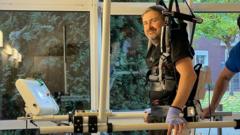
Dan Richards is currently undergoing treatment in Germany, where he is trialling two innovative therapies aimed at restoring mobility after a severe spinal cord injury. His case has gained attention as he combines stem cell treatment with a Hybrid Assistive Limb (HAL) suit, which translates brain signals into movement. This unique combination of therapies represents cutting-edge advancements in rehabilitative technology, offering hope not only for Dan but for many others facing similar challenges.
Key takeaways
- Dan Richards sustained a spinal cord injury during a New Year's Eve swim accident.
- Initially told he would be bed-bound, he has since regained movement in his arms and legs.
- Dan is currently undergoing innovative therapies in Germany, including stem cell treatment and a HAL suit.
- Fundraising efforts by friends and family have been crucial in supporting his treatment journey.
- The use of AI and robotics in rehabilitation is paving the way for new possibilities in recovery.
Timeline: how we got here
Here’s a brief timeline of key events in Dan Richards' journey since the accident:
- 31 December 2022: Dan Richards suffers a neck injury while swimming at Langland Bay, Swansea.
- January 2023: Initially diagnosed as paralysed from the neck down, Dan begins his rehabilitation journey.
- October 2023: Dan travels to Germany for a combination of stem cell treatment and HAL suit therapy.
What’s new vs what’s known
New today/this week
Dan's ongoing treatment in Germany marks a significant step in his recovery journey. The combination of therapies he is receiving is among the first of its kind, showcasing the evolving landscape of spinal injury rehabilitation.
What was already established
Prior to this innovative treatment, Dan had already begun to regain some mobility through physiotherapy in Wales, where he initially demonstrated movement in his toes, followed by legs and arms. His determination and the support from physiotherapy professionals have been pivotal in his progress.
Impact for the UK
Consumers and households
The inspirational story of Dan Richards highlights the importance of accessible healthcare and rehabilitation services in the UK. As advances in treatment become available, the potential for recovery from severe injuries may improve, impacting the lives of many individuals and their families.
Businesses and jobs
The advancements in medical technology, including robotics and AI in rehabilitation, signal potential growth opportunities for businesses in the healthcare sector. As demand for innovative treatments rises, the UK could see an increase in jobs related to rehabilitation technology.
Policy and regulation
Dan's case may spur discussions around healthcare policies concerning funding for advanced treatment options. The ongoing need for better access to cutting-edge rehabilitation technologies may prompt the UK government to consider new policies that support both research and patient access to such treatments.
Numbers that matter
- 1: Number of significant injuries Dan sustained that changed his life.
- 2: Number of innovative treatments he is currently undergoing in Germany.
- 6: Number of weeks remaining for Dan’s treatment in Germany.
- 40: Age of Dan’s partner, Anna, who has been a crucial support in his recovery journey.
- 2023: The year Dan's life-altering accident occurred, marking a new chapter in rehabilitation possibilities.
Definitions and jargon buster
- Spinal cord injury: Damage to the spinal cord that can result in loss of function, mobility, or sensation.
- Hybrid Assistive Limb (HAL): A robotic suit designed to assist movement by interpreting electrical signals from the brain.
- Stem cell treatment: A type of regenerative medicine that uses stem cells to repair damaged tissues.
- AI (Artificial Intelligence): Technology that simulates human intelligence processes, such as learning and problem-solving.
How to think about the next steps
Near term (0–4 weeks)
In the immediate future, Dan will continue his treatment in Germany, focusing on the integration of the HAL suit and stem cell therapies, which may yield significant results in his mobility.
Medium term (1–6 months)
Looking ahead, Dan’s progress will be closely monitored. If successful, he may require further rehabilitation support and continuous physiotherapy to maximise his recovery.
Signals to watch
- Updates on Dan's mobility and progress following his treatment.
- Research developments in spinal cord injury rehabilitation technologies.
- Potential policy changes in the UK regarding funding for advanced rehabilitation treatments.
Practical guidance
Do
- Stay informed about advancements in rehabilitation technologies that may aid recovery.
- Engage in fundraising or support initiatives for individuals with similar challenges.
- Consider private physiotherapy options if accessible within your means.
Don’t
- Don’t lose hope; recovery can be a long journey but progress is possible.
- Don’t hesitate to seek support from family, friends, and community resources.
- Don’t ignore the importance of mental health during recovery processes.
Checklist
- Research available rehabilitation technologies and options.
- Connect with support groups for spinal cord injury survivors.
- Explore fundraising opportunities for medical treatments.
- Consult healthcare professionals for tailored rehabilitation plans.
- Monitor progress and adjust rehabilitation strategies as needed.
Risks, caveats, and uncertainties
While Dan’s journey is hopeful, it is essential to acknowledge that spinal cord injuries can have unpredictable outcomes. Not all individuals may respond positively to similar treatments, and factors such as the extent of the injury and individual health conditions play significant roles. Furthermore, access to advanced treatments may not be available to everyone due to funding and healthcare policies.
Bottom line
Dan Richards' story illustrates the remarkable resilience of the human spirit in the face of devastating injury. With advancements in rehabilitation technology and ongoing support, the potential for recovery continues to grow. As more individuals like Dan embark on similar journeys, it is crucial for society to advocate for improved access to innovative treatments and the ongoing research necessary to push the boundaries of recovery.
FAQs
What happened to Dan Richards during the New Year's Eve swim?
Dan Richards suffered a neck injury after being flipped by a wave while swimming, resulting in paralysis from the neck down.
What treatments is Dan currently undergoing?
Dan is trialling a combination of stem cell treatment and using a Hybrid Assistive Limb (HAL) suit in Germany to aid his recovery.
How has Dan's condition improved since the accident?
Dan has regained some movement in his arms and legs, and he has even walked with assistance from advanced technology.