Could Rare Mountain Gorilla Twins Be the Newest Stars of Africa's Oldest National Park?
Published: 2026-01-07 16:00:25 | Category: world
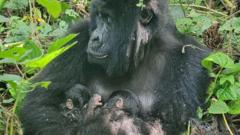
A pair of twin mountain gorillas has been born in Virunga National Park, eastern Democratic Republic of Congo, marking a rare occurrence for the endangered species, with twin births accounting for about 1% of all mountain gorilla births. This event has been hailed as a significant boost for conservation efforts aimed at protecting these remarkable primates.
Last updated: 16 October 2023 (BST)
What’s happening now
Conservationists at Virunga National Park announced the birth of twin mountain gorillas, a significant and rare event for this critically endangered species. The 22-year-old mother, Mafuko, was discovered cradling her newborn sons by community trackers on Saturday. This birth is particularly heartening given the twin births are infrequent, with only about 1% of mountain gorilla births resulting in twins. The park authorities have implemented additional monitoring measures to ensure the safety and survival of the twins in a challenging environment marked by poaching and armed conflict.
Key takeaways
- Twins are rare among mountain gorillas, comprising about 1% of total births.
- Mafuko has experienced significant hardships, including the loss of her mother and previous twin births.
- Virunga National Park's conservation efforts have led to an increase in mountain gorilla populations over the past decade.
Timeline: how we got here
Here's a brief timeline of key events related to mountain gorilla conservation in Virunga National Park:
- 100 years ago (1925): Virunga National Park was established to protect mountain gorillas.
- September 2020: Last recorded birth of mountain gorilla twins in Virunga.
- 2016: Mafuko gave birth to twins, but tragically, they both died within a week.
- 2018: Mountain gorillas' status upgraded from "critically endangered" to "endangered" due to conservation successes.
What’s new vs what’s known
New today/this week
The recent birth of twin mountain gorillas in Virunga National Park is fresh news, highlighting the ongoing conservation successes in the region. The announcement brings renewed hope for the survival of the species, especially considering the vulnerability of young gorillas in the wild.
What was already established
Mountain gorillas are known to be endangered, with fewer than 1,100 remaining in the wild. The conservation efforts in Virunga, supported by various organisations, have been crucial in stabilising and gradually increasing their population size over the last decade.
Impact for the UK
Consumers and households
The birth of twin mountain gorillas may not have direct immediate effects on UK consumers, but it highlights the importance of biodiversity and conservation efforts. Awareness of such events can foster greater engagement in wildlife conservation initiatives.
Businesses and jobs
Increased attention to mountain gorilla conservation could lead to enhanced eco-tourism opportunities in the region. This can create jobs and support local economies, particularly in conservation and tourism sectors, which are vital for the sustainability of communities surrounding the park.
Policy and regulation
Conservation efforts in Virunga are backed by international organisations, including the European Union and UNESCO. Continued support and funding for these initiatives are essential for the ongoing protection of mountain gorillas and their habitat.
Numbers that matter
- Fewer than 1,100: Estimated number of mountain gorillas remaining in the wild.
- 1%: Proportion of mountain gorilla births that are twins.
- 7,800 sq km: Area covered by Virunga National Park.
- 5: Number of times Mafuko has given birth to date.
- 3,000 sq miles: Equivalent of 7,800 sq km in miles.
Definitions and jargon buster
- Mountain gorilla: A subspecies of the eastern gorilla, found in the Virunga mountain range.
- Virunga National Park: Africa's oldest and largest national park, home to a diverse range of wildlife.
- UNESCO: United Nations Educational, Scientific and Cultural Organization, which designates World Heritage sites.
How to think about the next steps
Near term (0–4 weeks)
In the coming weeks, rangers will intensify monitoring of Mafuko and her twins to ensure their health and safety. Conservationists will closely observe their interactions and behaviour.
Medium term (1–6 months)
As the twins grow, ongoing monitoring will be critical. The success of their survival will depend on the continued support of conservation efforts and effective anti-poaching measures.
Signals to watch
- Updates from Virunga National Park regarding the twins' health and welfare.
- Conservation statistics showing trends in mountain gorilla populations.
- Reports on the effectiveness of anti-poaching patrols in the region.
Practical guidance
Do
- Support conservation organisations working to protect endangered species.
- Stay informed about wildlife conservation efforts and initiatives.
- Consider eco-tourism opportunities that benefit local communities and conservation.
Don’t
- Don’t engage in activities that harm wildlife or their habitats.
- Don’t ignore the importance of biodiversity and conservation in global ecosystems.
Checklist
- Check for updates on the health of the twins from Virunga National Park.
- Research conservation organisations to support financially or through volunteering.
- Learn about the ecological importance of mountain gorillas and their habitats.
- Engage with local conservation efforts and initiatives.
Risks, caveats, and uncertainties
While the birth of twin mountain gorillas is a positive development, challenges remain. The environment in which they live is fraught with danger due to poaching and armed groups. Additionally, the health of the twins and their mother will need to be monitored closely, as young gorillas are particularly vulnerable in their early days. The situation remains fluid, and any changes in the security dynamics of the region could impact their safety.
Bottom line
The birth of twin mountain gorillas in Virunga National Park is a remarkable event that signifies hope for the future of this endangered species. Ongoing conservation efforts are crucial in ensuring their survival amidst the challenges they face. Awareness and support for these initiatives can play a vital role in sustaining the population and protecting their habitats.
FAQs
What makes twin mountain gorilla births so rare?
Twin mountain gorilla births are rare, accounting for about 1% of all births, making this event especially significant for conservation efforts.
How are mountain gorillas monitored in Virunga National Park?
Mountain gorillas in Virunga are monitored by rangers and conservationists who provide close observation and necessary support to ensure their safety and wellbeing.
What is the current status of mountain gorillas?
Mountain gorillas are currently classified as "endangered," with fewer than 1,100 individuals left in the wild, primarily due to habitat loss and poaching.