What’s Driving the Massive Anti-Government Protests in Tehran?
Published: 2026-01-08 21:00:08 | Category: world
The recent protests in Iran, which are reportedly the largest against the clerical establishment in years, have drawn significant attention both domestically and internationally. Demonstrators are demanding the overthrow of Supreme Leader Ayatollah Ali Khamenei and the return of Reza Pahlavi, the exiled son of the former Shah. As unrest continues to escalate, with reports of violence and casualties, the situation poses serious implications for the Iranian regime and its citizens.
Last updated: 23 October 2023 (BST)
What’s happening now
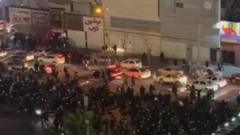
The protests in Iran have entered their 12th consecutive day, with demonstrators gathering in over 140 cities and towns across all 31 provinces. Footage verified by BBC Persian shows large crowds marching peacefully in Tehran and Mashhad, while reports indicate violent clashes in other areas. This widespread dissent has raised fears within the Iranian government, as it represents a significant challenge to the clerical regime that has ruled for decades.
Key takeaways
- Protests are ongoing across Iran, with calls for the regime's overthrow.
- At least 34 protesters and seven security personnel have reportedly died in the unrest.
- The value of the Iranian rial has plummeted, contributing to public discontent.
Timeline: how we got here
The current wave of protests began on 28 December 2022, triggered by a significant drop in the value of the Iranian currency, the rial. As the rial reached record lows and inflation soared to around 40%, frustrations among the populace grew, leading to shopkeepers taking to the streets. Over the following days, the protests spread rapidly, drawing in university students and citizens frustrated with the clerical government amidst a backdrop of economic mismanagement and international sanctions.
What’s new vs what’s known
New today/this week
Reports indicate that protests have intensified, with demonstrators openly calling for the resignation of Ayatollah Khamenei and expressing support for Reza Pahlavi. Additionally, the unrest has reportedly resulted in a rising death toll, with at least 45 protesters confirmed dead, including children, according to Norway-based Iran Human Rights.
What was already established
Prior to these protests, Iran had already been facing economic hardships exacerbated by international sanctions related to its nuclear programme. Public dissatisfaction was already simmering due to rampant inflation, corruption, and a general lack of political freedom under the clerical regime. The protests highlighted these longstanding issues and were sparked by immediate economic grievances.
Impact for the UK
Consumers and households
While the immediate effects of these protests are primarily felt within Iran, the implications for UK consumers could manifest through potential changes in international relations and economic sanctions. A prolonged period of instability in Iran may affect oil prices and global markets, which could ultimately impact UK households through increased energy costs.
Businesses and jobs
For UK businesses, particularly those engaged in trade with Iran, the ongoing protests may lead to further sanctions or changes in trade relations. Companies may need to reassess their strategies regarding investments in or partnerships with Iranian firms, especially given the rising tensions and potential for a more authoritarian crackdown on dissent.
Policy and regulation
The UK government may face pressures to respond to the situation in Iran, potentially leading to discussions around human rights abuses and reassessment of foreign policy towards Iran. Upcoming parliamentary debates may focus on how to support the Iranian people while balancing geopolitical interests.
Numbers that matter
- 34 protesters and 7 security personnel confirmed dead amidst ongoing unrest.
- Protests reported in over 140 cities across all 31 provinces of Iran.
- The Iranian rial has dropped to record lows against the US dollar, with inflation exceeding 40%.
Definitions and jargon buster
- Ayatollah: A high-ranking title given to Shiite clerics in Iran.
- Rial: The currency of Iran, which has seen significant devaluation.
- Reza Pahlavi: The exiled son of the last Shah of Iran, advocating for democratic reforms.
How to think about the next steps
Near term (0–4 weeks)
In the coming weeks, observers should watch for any government crackdowns on protests, as well as international responses to the rising death toll. This period may also see increased calls for reform or change from within Iran.
Medium term (1–6 months)
If unrest continues, it could lead to significant shifts in the Iranian political landscape, potentially prompting internal divisions within the government. The international community may increase sanctions or take other actions in response to human rights violations.
Signals to watch
- Monitor reports on protest turnout and government responses.
- Keep an eye on economic indicators in Iran, such as currency value and inflation rates.
- Watch for statements from international bodies regarding human rights and sanctions.
Practical guidance
Do
- Stay informed about developments in Iran through reliable news sources.
- Support organisations advocating for human rights and democratic reforms in Iran.
Don’t
- Don’t jump to conclusions about the outcomes of the protests without observing the ongoing situation.
- Don’t overlook the implications of the unrest on global markets and international relations.
Checklist
- Check for updates on the political situation in Iran regularly.
- Review your understanding of the Iranian economy and its challenges.
- Consider the implications of possible sanctions on international business relations.
Risks, caveats, and uncertainties
Given the fluid nature of the situation in Iran, various uncertainties remain. The government's response to protests could escalate tensions further, leading to more violence and casualties. Additionally, the international community's reaction may vary, impacting diplomatic relations and economic ties. It's essential to stay cautious and critically evaluate information from multiple sources.
Bottom line
The ongoing protests in Iran represent a significant challenge to the clerical regime, driven by a combination of economic grievances and calls for political reform. As the situation develops, it could have far-reaching implications for both Iranian citizens and international stakeholders, including the UK. Awareness and understanding of these dynamics will be crucial in navigating the unfolding events.
FAQs
What are the main reasons for the protests in Iran?
The protests in Iran are primarily driven by economic grievances, including the devaluation of the rial and high inflation, alongside a desire for political reform and opposition to the clerical regime.
How have the protests been received by the Iranian government?
The Iranian government has reportedly responded with a mix of tactics, including attempts at suppression and violent crackdowns, while also acknowledging some of the public grievances.
What can the UK do in response to the situation in Iran?
The UK can monitor the situation closely, potentially reassessing its foreign policy regarding Iran, and consider supporting human rights initiatives aimed at protecting Iranian citizens.