Is the Himalayas' Rocky Landscape a Warning Sign of Reduced Winter Snowfall?
Published: 2026-01-12 03:00:30 | Category: technology
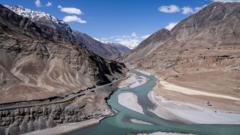
The Himalayas are experiencing significantly reduced winter snowfall, leading to bare and rocky landscapes where snow should prevail. Meteorologists report a decline in snowfall during the last five years compared to averages from 1980 to 2020, largely attributed to rising temperatures and global warming. This alarming trend poses serious implications for water supply, ecosystems, and the livelihoods of millions in the region.
Last updated: 10 October 2023 (BST)
What’s happening now
The situation regarding winter snowfall in the Himalayas has reached a critical point. Current meteorological data reveals that much of northern India, including states like Uttarakhand and Himachal Pradesh, is facing an unprecedented drop in winter precipitation, with forecasts indicating up to 86% less rainfall and snowfall from January to March compared to long-term averages. This stark decrease in winter weather events not only alters the iconic snowy landscape but also threatens the delicate balance of ecosystems and water supplies crucial for millions of people living in the region.
Key takeaways
- Winter snowfall in the Himalayas has decreased significantly over the last five years.
- Global warming is a major factor, causing faster snowmelt and altering precipitation patterns.
- Reduced snowfall impacts water supply for nearly two billion people across major river basins.
Timeline: how we got here
The decline in winter snowfall has been observed over several years, particularly from 2018 onwards. Key milestones include:
- 1980–2020: Average snowfall and precipitation data collected for long-term analysis.
- 2018: Initial signs of decreased winter snowfall begin to appear.
- 2020–2023: A notable trend emerges, with five consecutive winters reporting less snowfall.
- 2025: Research by Kieran Hunt highlights significant decreases in precipitation across the western and central Himalayas.
What’s new vs what’s known
New today/this week
Recent meteorological reports indicate that northern India experienced almost no precipitation in December 2022, with forecasts suggesting a continuation of this trend through early 2023. The Indian Meteorological Department has classified winter precipitation as significantly below long-term averages.
What was already established
Prior research has consistently pointed to a decline in winter precipitation in the Himalayan region, with studies indicating that temperatures have risen and snowfall has decreased by as much as 25% in the northwestern Himalayas since 1980. This information establishes a troubling pattern that correlates with global climate change indicators.
Impact for the UK
Consumers and households
The implications of reduced snowfall in the Himalayas extend to global water supply chains, including those affecting UK consumers. Reduced snowmelt can lead to water scarcity, which may impact the availability and price of water-intensive goods, including crops imported from affected regions.
Businesses and jobs
Industries relying on water from Himalayan rivers for irrigation and hydropower will face challenges, potentially affecting agriculture and energy production not only in the region but also in interconnected markets globally, including the UK.
Policy and regulation
As the situation evolves, UK policymakers may need to consider international cooperation on climate change and water resource management, as well as how these issues impact trade and environmental policies.
Numbers that matter
- 25%: Decrease in snowfall in the northwestern Himalayas over the past five years.
- 86%: Expected reduction in snowfall and rainfall in parts of northwest India from January to March 2023.
- 2 billion: People relying on water supply from Himalayan river basins, at risk due to declining snowmelt.
Definitions and jargon buster
- Long Period Average (LPA): The average rainfall or snowfall recorded over a region over 30 to 50 years.
- Snow drought: A condition of significantly reduced snow accumulation, impacting water resources.
How to think about the next steps
Near term (0–4 weeks)
In the immediate future, monitoring weather patterns will be crucial. Observers should pay attention to precipitation forecasts and any changes in temperature trends across the Himalayas.
Medium term (1–6 months)
As the spring snowmelt approaches, stakeholders should prepare for potential shifts in water availability. This preparation may involve adjusting agricultural practices and water management strategies.
Signals to watch
- Weekly precipitation reports from regional meteorological departments.
- Research updates from climate scientists regarding changes in westerly disturbances.
- Water levels in major rivers fed by Himalayan snowmelt.
Practical guidance
Do
- Stay informed about climate change and its impacts on water resources.
- Engage in sustainable practices that reduce water consumption.
Don’t
- Ignore the implications of climate change on global water supply chains.
- Overlook the interconnectedness of local actions and global impacts.
Checklist
- Review the latest climate reports relevant to the Himalayan region.
- Monitor water usage and identify areas for conservation.
- Stay updated on agricultural trends influenced by water availability.
- Engage with community initiatives focused on water conservation.
Risks, caveats, and uncertainties
While the data indicates a troubling trend, it is important to note that research is ongoing, and some studies report mixed findings regarding precipitation changes. The complexities of climate systems mean that predictions are subject to change as new data becomes available. Additionally, the long-term impacts on ecosystems and water supplies may take time to fully materialise, requiring ongoing monitoring and adaptive strategies.
Bottom line
The significant reduction in winter snowfall in the Himalayas presents a dual crisis of melting glaciers and diminishing snowpack, threatening water supply and ecological stability for millions. As the situation evolves, proactive measures, both locally and globally, are necessary to address the challenges posed by climate change.
FAQs
How is reduced snowfall in the Himalayas impacting water supply?
Reduced snowfall affects the snowmelt that feeds rivers, which is crucial for drinking water, irrigation, and hydropower for millions of people in the region.
What are westerly disturbances, and why do they matter?
Westerly disturbances are low-pressure systems that bring moisture from the Mediterranean to the Himalayas, contributing significantly to winter precipitation. Changes in these disturbances are linked to declining snowfall.
What is snow persistence, and why is it important?
Snow persistence measures how long snow remains on the ground without melting. Reduced snow persistence is a sign of decreased winter precipitation and is critical for assessing water availability downstream.