Is the Arrival of the Second Nuclear Reactor at Hinkley Point C a Game Changer?
Published: 2026-01-12 17:00:42 | Category: technology
The arrival of the second nuclear reactor at Hinkley Point C marks a significant milestone in the UK's energy landscape, with the project expected to open in 2031. This twin nuclear power station will generate enough electricity to power approximately three million homes, contributing to the UK’s shift towards more sustainable energy sources.
Last updated: 12 October 2023 (BST)
What’s happening now
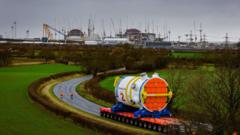
Hinkley Point C, the UK's newest nuclear power station, has received its second reactor pressure vessel, a critical component of the facility. This reactor, weighing 500 tonnes and measuring 13m (42ft) in length, was transported from France, showcasing the logistical complexity involved in the project. The successful delivery signifies substantial progress, with the first reactor already in place and ongoing construction work focusing on the remaining components and infrastructure.
Key takeaways
- The second reactor at Hinkley Point C has arrived, marking a major construction milestone.
- This project will ultimately power around three million homes once operational.
- Construction is expected to peak in the next 18 months, employing about 15,000 workers.
- The project's estimated cost has escalated to £46 billion from an initial £18 billion in 2017.
Timeline: how we got here
To understand the significance of this recent delivery, it is essential to look at the timeline of Hinkley Point C's development:
- 2017: Initial cost estimates for the project were around £18 billion.
- 2023: The first reactor pressure vessel was delivered to the site.
- October 2023: The second reactor pressure vessel arrives at Hinkley Point C.
- 2031: Expected operational date for Hinkley Point C.
What’s new vs what’s known
New today/this week
The delivery of the second reactor pressure vessel is the latest development, indicating that construction is advancing as planned. EDF's announcement highlights the importance of this component in the overall operations of the power station.
What was already established
Previously, the arrival of the first reactor in 2023 set the stage for the ongoing construction. The project has been framed as essential for the UK's energy transition, aiming to provide a stable and low-carbon energy source for millions of households.
Impact for the UK
Consumers and households
Once operational, Hinkley Point C is expected to provide significant energy security for UK households, reducing reliance on fossil fuels and contributing to lower carbon emissions. The power generated can support approximately three million homes, which is crucial for meeting energy demands as the population grows.
Businesses and jobs
The construction phase of Hinkley Point C is forecasted to create around 15,000 jobs, providing a substantial boost to local economies. Additionally, the operational phase is likely to enhance the UK's energy infrastructure, benefiting various sectors that depend on reliable electricity supply.
Policy and regulation
Hinkley Point C is a cornerstone of the UK government’s strategy to meet its climate targets. With rising costs, there may be scrutiny regarding funding and regulatory processes as the project progresses. Government support and policy frameworks will be critical in ensuring the successful completion and operation of the station.
Numbers that matter
- £46 billion: Current estimated cost of Hinkley Point C, up from £18 billion in 2017.
- 500 tonnes: Weight of the second reactor pressure vessel delivered.
- 13m (42ft): Length of the reactor pressure vessel.
- 3 million: Estimated number of homes powered by Hinkley Point C once operational.
- 15,000: Expected number of jobs created during the construction phase.
Definitions and jargon buster
- Nuclear fission: A process where the nucleus of an atom splits into two or more smaller nuclei, releasing a significant amount of energy used for power generation.
- Reactor Pressure Vessel (RPV): A vital component of a nuclear reactor that contains the nuclear fuel and the coolant, allowing for safe energy production.
How to think about the next steps
Near term (0–4 weeks)
Focus on the ongoing construction activities at Hinkley Point C, particularly the integration of pipes, cables, and equipment within Unit 1. Monitoring any logistical challenges or further developments related to the construction of Unit 2 will also be essential.
Medium term (1–6 months)
Expect to see heightened construction activity as the project reaches its peak. Ongoing updates from EDF regarding progress, timelines, and safety measures will be critical for stakeholders.
Signals to watch
- Press releases from EDF regarding construction milestones.
- Government announcements related to funding and support for the project.
- Updates on job creation and local economic impact from Hinkley Point C.
Practical guidance
Do
- Stay informed about Hinkley Point C's construction updates through reliable news sources.
- Understand the implications of nuclear energy in the context of the UK’s energy strategy.
- Engage with local community initiatives related to the project for potential job opportunities.
Don’t
- Don’t ignore the environmental discussions surrounding nuclear power.
- Don’t overlook the importance of safety protocols in nuclear facility construction and operation.
- Don’t assume the project will remain on budget; keep track of financial developments.
Checklist
- Check for updates on construction timelines and milestones.
- Follow news related to job opportunities at Hinkley Point C.
- Stay aware of public consultations and community engagement efforts.
- Monitor government policies affecting the energy sector.
- Understand the implications of rising project costs on energy prices.
Risks, caveats, and uncertainties
While the progress at Hinkley Point C is encouraging, several uncertainties remain. The rising costs could lead to financial pressures, and any delays could affect the operational timeline set for 2031. Additionally, public perception of nuclear energy continues to be a critical factor, with environmental concerns and safety risks needing ongoing attention. Stakeholders must remain vigilant regarding regulatory changes that could impact the project.
Bottom line
The arrival of the second reactor at Hinkley Point C is a pivotal moment for the UK's nuclear energy ambitions, demonstrating progress toward a more sustainable energy future. As construction continues, the project holds the potential to greatly enhance energy security and contribute to climate goals, though it faces challenges related to costs and public perception.
FAQs
What is Hinkley Point C?
Hinkley Point C is the UK’s newest nuclear power station, set to open in 2031, and it will provide energy for approximately three million homes.
How much has the cost of Hinkley Point C increased?
The estimated cost has risen from £18 billion in 2017 to £46 billion as of now, reflecting the complexities involved in its construction.
How many jobs will Hinkley Point C create?
During the construction phase, Hinkley Point C is expected to create around 15,000 jobs, contributing significantly to local employment opportunities.