Are the Northern Lights Painting the UK Skies with Pink and Green?
Published: 2026-01-20 05:00:19 | Category: technology
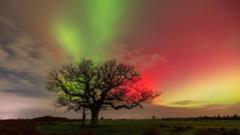
The stunning display of the Northern Lights, or Aurora Borealis, has captivated viewers across the UK, painting the night sky in vibrant shades of green and pink. This spectacular phenomenon occurs when solar eruptions send particles hurtling towards Earth, leading to a dazzling light show as these particles interact with atmospheric gases. Following a recent surge in solar activity, the Northern Lights were visible in areas far beyond their typical reach, including Scotland, Northern Ireland, Wales, and parts of England.
Last updated: 30 October 2023 (BST)
What’s happening now
Currently, the UK is experiencing a rare opportunity to view the Northern Lights due to "severe geomagnetic storms" reported by the Met Office. These storms have resulted in widespread auroras that have been visible as far south as northern Italy. The stunning light displays were particularly prominent on Monday evening, with reports of vivid colours illuminating the skies across various regions, including Scotland, Northern Ireland, and many parts of England. Although the intensity of this auroral activity is expected to diminish, there remains a chance that the lights could still be visible in parts of Scotland and Northern Ireland on Tuesday.
Key takeaways
- The Northern Lights have been visible across the UK, including Scotland, Northern Ireland, and England.
- Such visibility is due to severe geomagnetic storms linked to a Coronal Mass Ejection (CME) from the Sun.
- Oxygen and nitrogen in the atmosphere create the vibrant colours observed in the auroras.
Timeline: how we got here
The visibility of the Northern Lights in the UK follows a series of notable solar activities:
- 23 October 2023: A significant Coronal Mass Ejection occurred, sending particles towards Earth.
- 29 October 2023: Severe geomagnetic storms led to heightened visibility of the aurora across the UK.
- 30 October 2023: The Met Office announced continued potential for auroras, particularly in Scotland and Northern Ireland.
What’s new vs what’s known
New today/this week
The most recent updates indicate that the auroras are the result of a major solar event, with unprecedented visibility extending into southern regions of the UK, a rare occurrence for such a natural phenomenon.
What was already established
The Northern Lights typically occur near the Arctic Circle, characterised by their vibrant colours resulting from solar particles colliding with atmospheric gases. Historically, their visibility in the UK has been limited, with rare opportunities during periods of heightened solar activity.
Impact for the UK
Consumers and households
The current auroral activity has sparked interest among the public, with many venturing outside to witness the natural spectacle. While there are no direct economic implications from this event, it has encouraged local tourism, particularly in areas where visibility was strongest.
Businesses and jobs
Local businesses, especially in tourism and hospitality, may see a temporary increase in activity as people travel to catch a glimpse of the Northern Lights. However, this surge is likely to be short-lived as the auroral activity subsides.
Policy and regulation
There are no immediate regulatory implications from this event; however, the occurrence of such natural phenomena highlights the importance of monitoring solar activity and its potential impacts on Earth, including communications and power systems.
Numbers that matter
- 1 – The number of major Coronal Mass Ejections leading to this week's auroras.
- 200 – The approximate number of miles south from the Arctic Circle that the Northern Lights were visible, reaching areas like northern Italy.
- 3 – The primary colours emitted by atmospheric gases during the auroras: green, purple, and blue.
Definitions and jargon buster
- Aurora Borealis: A natural light display predominantly seen in high-latitude regions, caused by the interaction of solar wind with the Earth's magnetic field.
- Coronal Mass Ejection (CME): A significant release of plasma and magnetic field from the solar corona, often leading to geomagnetic storms on Earth.
- Geomagnetic Storm: A temporary disturbance of the Earth's magnetosphere caused by solar wind, which can result in auroras.
How to think about the next steps
Near term (0–4 weeks)
As the geomagnetic activity subsides, the likelihood of seeing the Northern Lights in the UK will decrease. However, it's advisable to keep an eye on solar forecasts for potential future occurrences.
Medium term (1–6 months)
Monitoring solar activity remains essential, as future CMEs could produce similar auroral phenomena. Seasonal changes and solar cycles may influence visibility during this period.
Signals to watch
- Met Office reports on solar activity and geomagnetic storms.
- Local weather conditions that may affect visibility of the Northern Lights.
- Community events or tours aimed at observing future auroras.
Practical guidance
Do
- Check local weather forecasts for clear skies before heading out to view the auroras.
- Use social media to find real-time updates on aurora visibility from other observers.
- Dress warmly and prepare for a late-night outing, as the best viewing times are typically after dark.
Don’t
- Don't rely solely on forecasts; actual visibility can vary greatly based on local conditions.
- Don't forget to respect nature and local wildlife when venturing to view the lights.
Checklist
- Check aurora forecasts regularly.
- Find a dark location away from city lights.
- Bring binoculars or a camera for better viewing.
- Stay informed about weather changes.
- Share your experience with friends and family.
Risks, caveats, and uncertainties
While the recent auroral activity is a spectacular event, it is essential to understand that visibility can vary widely based on geographic location and local weather conditions. The intensity of the geomagnetic storms may also fluctuate, leading to uncertainty regarding future sightings. Therefore, while excitement is warranted, expectations should remain tempered.
Bottom line
The recent display of the Northern Lights across the UK serves as a reminder of the dynamic relationship between solar activity and our atmosphere. As solar phenomena continue to evolve, staying informed can enhance future opportunities to witness this breathtaking natural spectacle.
FAQs
What causes the Northern Lights?
The Northern Lights, or Aurora Borealis, are caused by particles emitted from the Sun interacting with the Earth's atmosphere, producing colourful displays as they collide with gases like oxygen and nitrogen.
How often can the Northern Lights be seen in the UK?
Typically, the Northern Lights are visible near the Arctic Circle. However, during periods of high solar activity, they can occasionally be seen in the UK, particularly in Scotland and Northern Ireland.
What should I do if I want to see the Northern Lights?
To increase your chances of seeing the Northern Lights, check weather forecasts for clear skies, monitor aurora forecasts, and find a dark location away from city lights.