Can the First All-Female British Team Conquer the 8,000km Dakar Rally?
Published: 2026-01-24 13:00:42 | Category: technology
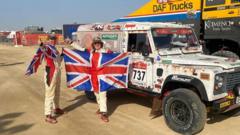
Marcella Kirk and Helen Tait-Wright have made history as the first all-female British team to complete the grueling Dakar Rally. Their journey spanned 8,000 km (4,970 miles) across Saudi Arabia, showcasing their determination, resourcefulness, and resilience. The pair raised £114,000 to fund their specially adapted Land Rover and expenses, demonstrating their commitment to this challenging feat.
Last updated: 09 October 2023 (BST)
What’s happening now
Marcella Kirk and Helen Tait-Wright's monumental achievement marks a significant milestone not only for themselves but also for female representation in sports, particularly in extreme challenges like the Dakar Rally. Completing the rally is a testament to their skills, teamwork, and the extensive preparation that went into their journey. Their success also highlights the growing support for women in motorsport and the importance of breaking gender barriers in traditionally male-dominated environments.
Key takeaways
- Kirk and Tait-Wright are the first all-female British team to finish the Dakar Rally.
- The duo raised £114,000 to fund their participation, including selling personal possessions.
- Their vehicle, a modified 1988 Land Rover Defender 110, was crucial for navigating the challenging terrain.
- They faced significant challenges, including a tyre blowout during the final stretch.
- Their achievement has inspired many and garnered support from the public.
Timeline: how we got here
The journey to this historic completion of the Dakar Rally has been a long one. Here’s a brief timeline of key events leading to their achievement:
- 2019: Kirk and Tait-Wright begin planning for their participation in the Dakar Rally.
- 2022: They start fundraising efforts, raising £114,000 through sponsorship and personal sales.
- December 2022: The duo travels to Saudi Arabia for the rally.
- January 2023: They complete the Dakar Rally, finishing 83rd in the Dakar Classic section.
What’s new vs what’s known
New today/this week
The completion of the rally by Kirk and Tait-Wright has recently garnered attention, highlighting their unique journey and the obstacles they overcame. Their story serves as an inspiration for aspiring female athletes and adventurers.
What was already established
The Dakar Rally is known for being one of the toughest off-road endurance events globally, pushing participants to their limits. Previous years have seen few women participating, making Kirk and Tait-Wright's achievement even more significant in promoting gender equality in motorsport.
Impact for the UK
Consumers and households
As Kirk and Tait-Wright return home as champions, their story has sparked interest in adventure sports among the British public. The rally’s exposure may encourage more individuals, particularly women, to engage in motorsport or off-road adventures, promoting active lifestyles and community engagement.
Businesses and jobs
The successful completion of the rally has the potential to influence sponsorship opportunities for female athletes in motorsport. This could lead to increased investment in women's sports, creating more opportunities for female competitors and promoting diversity within the industry.
Policy and regulation
The achievement of Kirk and Tait-Wright may prompt discussions about increasing support for women in sports at various levels, including potential policy changes to encourage female participation in motorsport and other traditionally male-dominated fields.
Numbers that matter
- 8,000 km: The total distance of the Dakar Rally they completed.
- £114,000: The amount raised to fund their participation in the rally.
- 83rd: Their finishing position in the Dakar Classic section.
- 1988: The year their vehicle, a Land Rover Defender 110, was manufactured.
- 56 and 55: The ages of Tait-Wright and Kirk, respectively, demonstrating that age is not a barrier in adventure sports.
Definitions and jargon buster
- Dakar Rally: An annual off-road rally race that is one of the most challenging endurance events in motorsport.
- Dakar Classic: A category within the rally that allows vintage vehicles to participate.
How to think about the next steps
Near term (0–4 weeks)
The immediate focus for Kirk and Tait-Wright will be to share their experiences, possibly through interviews and public speaking engagements. This could further inspire others and raise awareness about female representation in motorsport.
Medium term (1–6 months)
In the coming months, they may explore opportunities for partnerships or sponsorships to support their future adventures, potentially leading to more participatory events focusing on inclusivity in sports.
Signals to watch
- Increased media coverage of women in motorsport.
- New sponsorship deals for female athletes within the rally and motorsport sectors.
- Community events encouraging female participation in adventure sports.
Practical guidance
Do
- Support female athletes by attending events and sharing their stories.
- Consider participating in adventure sports or motorsport events.
- Encourage young girls to pursue their interests in sports and outdoor activities.
Don’t
- Discourage women from participating in traditionally male-dominated sports.
- Assume that age is a barrier to participating in adventure sports.
- Underestimate the importance of teamwork and support in achieving goals.
Checklist
- Research local adventure sports clubs that support female participation.
- Follow inspiring female athletes on social media.
- Attend community events focused on promoting inclusivity in sports.
- Consider volunteering for organisations that support women in sports.
- Share stories of female achievements in sports to inspire others.
Risks, caveats, and uncertainties
While Kirk and Tait-Wright's achievement is commendable, it is essential to recognise that the Dakar Rally is inherently dangerous. Participants face various risks, including mechanical failures, extreme weather conditions, and challenging terrains. Their success does not eliminate these risks but rather highlights the importance of preparation, teamwork, and resilience.
Bottom line
The successful completion of the Dakar Rally by Marcella Kirk and Helen Tait-Wright is a landmark moment for female representation in adventure sports. Their story of perseverance and determination serves as an inspiration for many, encouraging a shift towards inclusivity in motorsport. As more women feel empowered to pursue similar challenges, the landscape of adventure sports may begin to change for the better.
FAQs
What is the Dakar Rally?
The Dakar Rally is a challenging off-road endurance race known for its difficult terrains and long distances, attracting competitors from around the world.
How did Kirk and Tait-Wright prepare for the rally?
They raised £114,000 through sponsorship and personal sales to fund their specially adapted Land Rover and cover expenses for the rally.
What challenges did they face during the rally?
They encountered significant challenges, including a tyre blowout during the final stretch, which almost jeopardised their completion of the race.