Who Are the Three Charged for Intifada Chants at the Pro-Palestinian Protest?
Published: 2026-01-26 18:00:41 | Category: technology
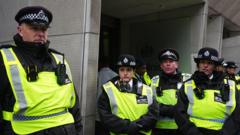
Three pro-Palestinian demonstrators have been charged with stirring up racial hatred due to alleged chants calling for an intifada during a protest in central London on 17 December 2025. The case has ignited a debate around freedom of speech and the implications of protest actions in the UK.
Last updated: 23 January 2026 (BST)
What’s happening now
On Monday, 22 January 2026, Abdallah Alanzi, Haya Adam, and Azza Zaki were charged with using threatening, abusive, or insulting words or behaviour intended to stir up racial hatred during a pro-Palestinian protest outside the Ministry of Justice. The trio, all Londoners, faces serious legal repercussions as their case is set to be heard in Westminster Magistrate's Court on 23 February 2026. This development follows heightened scrutiny on protest activities in light of recent global events, prompting the Metropolitan Police to take a firmer stance on chants perceived as inciting violence or racial hatred.
Key takeaways
- Three demonstrators charged with stirring up racial hatred over alleged chants.
- The charges stem from a protest outside the Ministry of Justice on 17 December 2025.
- Police have increased scrutiny of protest chants following violent incidents globally.
Timeline: how we got here
Key dates in this unfolding situation include:
- 7 October 2023: Attacks in Israel escalate tensions, leading to ongoing pro-Palestinian demonstrations in the UK.
- 17 December 2025: The protest at the Ministry of Justice occurs, during which the charged individuals allegedly made inflammatory chants.
- 22 January 2026: Alanzi, Adam, and Zaki are formally charged by the Crown Prosecution Service.
- 23 February 2026: Scheduled court appearance for the charged individuals.
What’s new vs what’s known
New today/this week
The recent charges against the three demonstrators mark a significant escalation in the legal response to protest activities linked to the Israel-Palestine conflict. The Metropolitan Police's Public Order Crime team has indicated a zero-tolerance policy towards chants that could incite racial hatred, particularly in the context of recent violent events related to the conflict.
What was already established
Since the October 2023 attacks in Israel, protests in London have been frequent, with many demonstrators expressing solidarity with Palestine. However, these gatherings have also faced criticism from Jewish community groups who argue that some chants and slogans have crossed the line into incitement of hate against Jewish people. The police's previous warnings about the potential consequences of such chants were already in place before this latest incident.
Impact for the UK
Consumers and households
The legal actions surrounding these protests may have wider implications for public gatherings and the freedom to express political views in the UK. Households may feel the impact of increased police presence at protests and demonstrations, potentially deterring participation in future events.
Businesses and jobs
For businesses in the vicinity of protests, this heightened scrutiny of demonstrators could lead to disruptions. Companies may need to develop strategies to mitigate the impact of protests on their operations, especially in areas frequently affected by such gatherings.
Policy and regulation
The ongoing situation may prompt a review of policies regarding public demonstrations and freedom of speech. Lawmakers could face pressure to clarify the boundaries of acceptable protest behaviour, especially in light of the changing social and political landscape.
Numbers that matter
- 3 individuals charged with stirring up racial hatred.
- 1 scheduled court appearance on 23 February 2026.
- 15 people killed in the Bondi attack in Australia, raising concerns over the rhetoric used in protests.
Definitions and jargon buster
- Intifada: An Arabic term meaning "uprising," often used in the context of Palestinian resistance.
- Public Order Crime: A category of offences relating to the disruption of public peace, including protests and demonstrations.
How to think about the next steps
Near term (0–4 weeks)
In the immediate future, observers should keep an eye on the upcoming court case scheduled for 23 February. This will likely set a precedent for how similar cases are handled in the future.
Medium term (1–6 months)
In the coming months, we could see a shift in public attitudes towards protests, especially those involving contentious issues. Depending on the outcomes of legal actions, there may be calls for stricter regulations or clearer guidelines on protest behaviour.
Signals to watch
- Reactions from community groups regarding the legal actions taken against the demonstrators.
- Statements from police regarding future protest management and policing strategies.
- Public opinion polls reflecting changes in attitudes towards protests related to the Israel-Palestine conflict.
Practical guidance
Do
- Stay informed about the legal implications of protest activities.
- Consider the potential consequences of language used during demonstrations.
Don’t
- Don’t assume all protests will be treated equally by law enforcement.
- Don’t ignore the importance of peaceful expression in political discourse.
Checklist
- Review recent news on protest laws and regulations.
- Understand the implications of freedom of speech in public gatherings.
- Consider joining advocacy groups that align with your views on protest rights.
Risks, caveats, and uncertainties
There remains considerable uncertainty regarding how the legal proceedings will unfold and the potential ramifications for future protests. The definitions of "stirring up racial hatred" can be subjective and may lead to varying interpretations in the court system. Additionally, community reactions could further polarise opinions on the matter, complicating the discourse surrounding freedom of speech versus public order.
Bottom line
The charges against the three demonstrators signify a crucial moment in the ongoing debate surrounding freedom of speech and the limits of protest in the UK. As the legal proceedings commence, the outcomes may shape not only public discourse but also policies affecting how protests are managed in the future.
FAQs
What did the demonstrators allegedly chant?
The demonstrators are accused of chanting slogans related to an "intifada," which is associated with uprisings and protests against perceived oppression.
When will the court case take place?
The court case for the charged individuals is scheduled for 23 February 2026 at Westminster Magistrate's Court.
How have community groups responded?
Jewish community groups have welcomed the police's tougher stance, while pro-Palestinian organisations argue that it infringes on freedom of speech and the right to protest.