Is India Poised to Dominate the Computer Chip Industry?
Published: 2026-01-27 01:00:25 | Category: technology
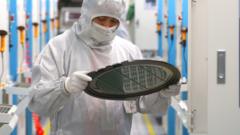
India is on the brink of establishing its own semiconductor industry, which is vital for companies like Tejas Networks that rely on specialised chips for telecommunications. The pandemic exposed vulnerabilities in global supply chains, prompting Indian firms to design chips locally while seeking manufacturing solutions to enhance resilience. With government support, companies like Kaynes Semicon are beginning to fill the manufacturing gap, signalling a transformative shift for the Indian tech landscape.
Last updated: 27 October 2023 (BST)
What’s happening now
The semiconductor landscape is shifting dramatically in India as the government and private sectors work together to establish a robust manufacturing ecosystem. Companies like Kaynes Semicon are making strides in assembling and testing essential chips, addressing the challenges exposed during the COVID-19 pandemic. With a focus on reliable local supply chains, India aims to significantly reduce dependence on international manufacturers, especially in critical areas like telecommunications and defence.
Key takeaways
- India is developing its own semiconductor manufacturing industry to address supply chain vulnerabilities.
- Kaynes Semicon has launched a facility to assemble and test chips, marking a significant step forward.
- Telecom chips, which are crucial for large data handling, are a primary focus for Indian manufacturers.
Timeline: how we got here
The push for an Indian semiconductor industry gained momentum during the COVID-19 pandemic, which exposed the fragility of global supply chains. Key dates include:
- November 2022: Kaynes Semicon begins production at its new facility in Gujarat.
- 2023: Initial government initiatives to bolster semiconductor manufacturing are announced, aiming to attract investment and expertise.
- 2023: Tejas Networks and other firms express optimism about sourcing chips locally as production capacity grows.
What’s new vs what’s known
New today/this week
Recent developments include Kaynes Semicon commencing mass production of chips designed for telecommunications and automotive applications. This marks a pivotal moment in India's semiconductor journey, showcasing the government's commitment to building a local manufacturing base.
What was already established
Historically, India has excelled in chip design, with a significant proportion of the world's semiconductor engineers based in the country. However, the lack of domestic manufacturing capabilities has prompted recent government interventions and initiatives to strengthen this sector.
Impact for the UK
Consumers and households
The growth of India's semiconductor industry could stabilise supply chains for telecommunications and electronic devices, indirectly benefiting UK consumers by reducing reliance on imported chips. This may lead to more competitive pricing and better access to technology.
Businesses and jobs
For UK-based companies that rely on telecommunications infrastructure, a reliable supply of locally manufactured chips from India could mean less disruption and improved service quality. Additionally, the development of this sector may create opportunities for UK firms to collaborate with Indian manufacturers.
Policy and regulation
The UK is likely to monitor India's progress in semiconductor manufacturing closely, as it could influence global supply chain strategies. Regulatory frameworks may evolve to facilitate cooperation between UK and Indian tech industries, fostering innovation and investment.
Numbers that matter
- 20%: Proportion of the world's semiconductor engineers based in India.
- $260 million (£270 million): Investment made by Kaynes Semicon in its semiconductor facility.
- 10-12 steps: The number of stages involved in the chip packaging process, emphasising the complexity of semiconductor manufacturing.
Definitions and jargon buster
- Semiconductor: A material that has electrical conductivity between a conductor and an insulator, essential for electronic devices.
- Wafer fabrication: The process of creating integrated circuits on a thin slice of semiconductor material.
- Outsourced Semiconductor Assembly and Test (Osat): The final stages of semiconductor production involving assembly, testing, and packaging of chips.
How to think about the next steps
Near term (0–4 weeks)
Watch for announcements from Kaynes Semicon regarding production milestones and partnerships with telecom companies, as they ramp up operations.
Medium term (1–6 months)
Expect further developments in India's semiconductor ecosystem, including potential new investments and the establishment of additional manufacturing facilities.
Signals to watch
- Updates from the Indian government on policy changes or incentives for semiconductor manufacturing.
- News on collaborations between Indian and UK tech firms in the semiconductor sector.
- Market responses to the availability of locally manufactured chips in telecommunications and consumer electronics.
Practical guidance
Do
- Stay informed about developments in India’s semiconductor industry and its implications for global supply chains.
- Consider potential collaborations or investments in Indian tech firms if you are in the electronics sector.
Don’t
- Don’t overlook the importance of local supply chains when planning for future tech investments.
- Don’t assume that India will immediately compete with established semiconductor manufacturers without significant time and investment.
Checklist
- Monitor news on semiconductor developments in India.
- Assess your dependence on international chip suppliers.
- Evaluate potential partnerships with Indian firms in the semiconductor space.
- Consider attending industry conferences focusing on electronics and semiconductor manufacturing.
Risks, caveats, and uncertainties
While the Indian government is committed to fostering a semiconductor industry, challenges remain in terms of technology transfer, workforce training, and establishing a competitive edge against established manufacturers in Taiwan and China. The success of initiatives like those from Kaynes Semicon will depend on overcoming these barriers and maintaining a consistent investment pipeline.
Bottom line
The emergence of India's semiconductor industry is a critical development for both local and global markets. As companies like Kaynes Semicon begin production, the potential for reduced reliance on international chip suppliers grows. Long-term success will hinge on continued government support and strategic investments in technology and workforce development.
FAQs
What is the significance of India's semiconductor industry?
India's semiconductor industry aims to reduce dependence on foreign chip suppliers, ensuring a more reliable supply chain for telecommunications and electronics.
How does Kaynes Semicon contribute to this industry?
Kaynes Semicon has established a facility for assembling and testing chips, marking a significant step in India's efforts to build a semiconductor manufacturing base.
What types of chips will India focus on initially?
Initially, India will focus on producing chips for telecommunications, automotive, and defence sectors, rather than the most advanced chips used in AI or high-end consumer electronics.