Will India and the EU Unveil a Game-Changing Trade Deal?
Published: 2026-01-27 07:00:11 | Category: world
The European Union (EU) and India are poised to announce a significant trade deal after nearly two decades of intermittent negotiations, as both parties seek to strengthen their economic ties amid rising geopolitical tensions with the United States. This landmark agreement aims to enhance market access for Indian exports to Europe while facilitating easier entry for European investments and goods into India.
Last updated: 25 October 2023 (BST)
What’s happening now
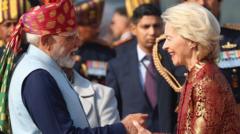
India's Commerce Secretary, Rajesh Agarwal, confirmed on Monday that negotiations for the long-awaited trade deal have concluded, with an official announcement expected soon. European Commission President Ursula von der Leyen and European Council President António Costa are currently in Delhi, where they are attending India's Republic Day celebrations and will meet Prime Minister Narendra Modi for a bilateral summit. The deal is anticipated to signal a commitment to free trade at a time when global protectionism is on the rise.
Key takeaways
- The EU and India are finalising a major trade deal after years of stalled negotiations.
- Both parties aim to enhance market access for exports and investments.
- The deal is seen as a strategic response to rising tensions with the US.
- Formal signing of the agreement is expected later this year after necessary approvals.
- This partnership could significantly influence global trade dynamics.
Timeline: how we got here
The journey towards this trade agreement has been long and complex, with key milestones as follows:
- 2007: Initial talks for a trade deal between India and the EU commence.
- 2013: Negotiations stall due to disagreements over market access and regulatory issues.
- July 2022: Formal discussions are reinitiated, focusing on outstanding issues.
- October 2023: Final negotiations conclude, with an announcement expected imminently.
What’s new vs what’s known
New today/this week
The concluding remarks by Rajesh Agarwal indicate that both sides have resolved outstanding issues in the negotiations, paving the way for the formal announcement of the trade deal. The presence of high-ranking EU officials in India underscores the importance of this agreement in the current geopolitical climate.
What was already established
Prior to this week, the trade deal had encountered various obstacles, particularly related to access to India's automobile market and agriculture products. The EU has consistently sought to improve its trade position in India, which has been a growing market for European goods and investments.
Impact for the UK
Consumers and households
The trade deal is expected to have a ripple effect on UK consumers, particularly as the EU remains a significant trading partner. An increase in Indian exports may lead to a wider variety of goods available in the UK market, potentially affecting prices and availability.
Businesses and jobs
For UK businesses, the trade agreement between India and the EU could create competitive advantages in sectors such as technology, textiles, and pharmaceuticals. Companies may find new opportunities for collaboration and investment, leading to job creation in both regions.
Policy and regulation
The UK government will likely monitor the developments closely, as the outcome of the EU-India trade deal may influence its own trade negotiations. Upcoming consultations and regulatory adjustments may be necessary to align with the new trade dynamics.
Numbers that matter
- The EU is India's largest trading partner, with bilateral merchandise trade reaching approximately $136 billion (£99.4 billion) in 2024-25.
- The trade deal could represent around 25% of global GDP, highlighting its significance on the world stage.
- Over the past decade, trade between India and the EU has nearly doubled.
- Tariffs imposed by the US on Indian goods have reached 50%, influencing India's trade strategy.
- Recent trade agreements signed by India with the UK, Oman, and New Zealand demonstrate its proactive approach in securing alternative markets.
Definitions and jargon buster
- EU: European Union, a political and economic union of member states located primarily in Europe.
- Tariff: A tax imposed on imported goods, often used to protect domestic industries.
- Bilateral: Related to two parties, often referring to agreements made between two countries.
- GDP: Gross Domestic Product, a monetary measure of the market value of all final goods and services produced in a specific time period.
How to think about the next steps
Near term (0–4 weeks)
In the coming weeks, observers should anticipate the official announcement of the trade deal, as well as details regarding its implementation and specific terms. Stakeholders will be keenly monitoring reactions from various sectors within both India and the EU.
Medium term (1–6 months)
As the deal progresses towards formal signing and ratification by the European Parliament and European Council, businesses should prepare for potential changes in trade dynamics and regulations. This period will also see increased discussions on compliance and market integration.
Signals to watch
- Official announcement and details of the trade deal.
- Reactions from business leaders and trade associations in both regions.
- Upcoming sessions of the European Parliament regarding the ratification of the deal.
Practical guidance
Do
- Stay informed about the evolving terms of the trade deal and its implications for your business.
- Engage with trade associations to understand the potential impacts on your industry.
- Plan for adjustments in supply chains that may result from changes in tariffs and regulations.
Don’t
- Ignore the potential competitive advantages that may arise from the trade deal.
- Overlook the importance of compliance with new regulatory standards that may be introduced.
- Assume that the trade dynamics will remain static; be proactive in adapting to changes.
Checklist
- Monitor announcements from the EU and Indian government regarding the trade deal.
- Evaluate your business strategies to align with potential new market opportunities.
- Assess your supply chain for vulnerabilities that may arise from regulatory changes.
- Engage with legal and trade experts to ensure compliance with new trade rules.
- Participate in industry forums to share insights and strategies with peers.
Risks, caveats, and uncertainties
While the trade deal is poised to offer significant opportunities, uncertainties remain regarding its implementation and the specific terms agreed upon by both parties. Analysts will be scrutinising the final text of the agreement to determine how effectively it addresses key sticking points, such as tariffs on agricultural products and access to the automobile market. Political dynamics may also shift, influencing the deal's ratification process and its long-term viability.
Bottom line
The impending trade deal between the European Union and India signifies a pivotal moment in their economic relationship, particularly against the backdrop of rising global protectionism. As both parties prepare for a formal announcement, UK stakeholders should remain vigilant and prepare to adapt to the resultant shifts in trade dynamics that may arise from this significant agreement.
FAQs
What is the significance of the EU-India trade deal?
The EU-India trade deal is significant as it aims to enhance market access for Indian exports and European investments, reflecting a commitment to free trade amid rising protectionism globally.
When is the trade deal expected to be formally signed?
The formal signing of the trade deal is likely to occur later this year after it receives approval from the European Parliament and the European Council.
How will this trade deal impact UK businesses?
The trade deal is expected to create competitive advantages for UK businesses by increasing access to Indian markets and potentially leading to new collaboration opportunities in various sectors.