What Is Curling and How Does It Work?
Published: 2026-02-04 17:00:34 | Category: sport
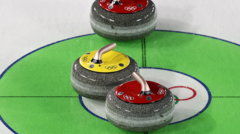
Curling is a strategic, precision sport played on ice, where two teams take turns sliding granite stones towards a target area known as the house. Team GB's curling team, which showcased its skills at the last Winter Olympics in Beijing, is gearing up for the upcoming 2026 Winter Olympics in Milan-Cortina, where 10 Scots will be among the competitors. Understanding the nuances of how curling operates, including scoring methods and player roles, is essential to appreciate this fascinating sport fully.
Last updated: 02 February 2026 (BST)
What’s happening now
As the 2026 Winter Olympics in Milan-Cortina approaches, the anticipation surrounding Team GB’s curling team is palpable. With a strong Scottish representation and a legacy of success in the sport, the team is viewed as a strong contender for medals. The upcoming competition, running from 6 to 22 February 2026, will feature both men's and women's teams competing in their respective categories, alongside a mixed event.
Key takeaways
- Curling involves sliding stones towards a target, emphasizing strategy and teamwork.
- Team GB's curling prowess stems from a rich Scottish heritage and access to excellent facilities.
- The Olympics will see competitions in men's, women's, and mixed formats, each with specific rules.
Timeline: how we got here
The journey leading to the 2026 Winter Olympics in Milan-Cortina has been shaped by both past performances and developments in the sport. Here’s a brief overview:
- February 2022: Team GB secured two medals in curling during the Beijing Winter Olympics.
- Post-Olympics: The team underwent training and development, refining skills and strategies.
- February 2026: The Winter Olympics take place in Milan-Cortina from 6 to 22 February.
What’s new vs what’s known
New today/this week
As the games draw nearer, Team GB's final roster and strategies are being fine-tuned. The athletes are also adapting to updated training regimes that integrate advanced techniques in stone delivery and sweeping.
What was already established
Team GB's historical strength in curling has been built upon a foundation of skill and experience, particularly from Scottish curlers who have a deep-rooted tradition in the sport. The team's success in previous Olympics has set high expectations for the upcoming competition.
Impact for the UK
Consumers and households
The excitement surrounding the Olympics can boost local economies, particularly in Scotland, where curling has significant cultural importance. Increased viewership may lead to a surge in interest in the sport, promoting local clubs and facilities.
Businesses and jobs
With heightened interest in curling, businesses linked to sports equipment and ice rink maintenance may see increased demand. Moreover, local jobs associated with event management and hospitality may benefit from the influx of visitors during the Olympics.
Policy and regulation
The UK government and sports bodies are likely to support initiatives that promote winter sports, potentially leading to more funding for ice rinks and training programs in the future.
Numbers that matter
- 22: The number of ice rinks in Scotland, the highest in the UK, which supports curling development.
- 10: The number of Scots competing in Team GB at the 2026 Winter Olympics.
- 2: The total medals won by Team GB in curling during the previous Winter Olympics in Beijing.
Definitions and jargon buster
- House: The target area where stones are aimed.
- Button: The centre of the house, where points are scored.
- Hammer: The last stone thrown in an end, which can be crucial for scoring.
- End: A segment of the game, akin to an inning in baseball, where players take turns throwing stones.
How to think about the next steps
Near term (0–4 weeks)
In the lead-up to the Olympics, teams will focus on final training sessions, refining strategies and preparing for the intense competition ahead.
Medium term (1–6 months)
Following the Olympics, the focus will shift towards evaluating performances, and athletes may seek to either continue their careers or transition to coaching and mentorship roles.
Signals to watch
- Results of pre-Olympic tournaments and trials.
- Media coverage and public interest levels leading up to and during the Olympics.
- Performance metrics from training sessions and practice matches.
Practical guidance
Do
- Stay informed about the schedule and results of the Olympics.
- Support local curling clubs and initiatives promoting the sport.
- Engage with curling content to gain a better understanding of the sport's intricacies.
Don’t
- Underestimate the tactical complexity of curling.
- Assume that curling is purely a leisurely activity; it requires significant skill and practice.
- Miss out on local events or viewing parties during the Olympics.
Checklist
- Familiarise yourself with the rules of curling.
- Learn about the athletes representing Team GB.
- Plan to watch key matches during the Olympics.
- Explore local curling opportunities for participation.
Risks, caveats, and uncertainties
While Team GB has a strong history in curling, the outcome of the 2026 Winter Olympics remains uncertain. Factors such as athlete performance, weather conditions, and competition from other nations could significantly impact results. Additionally, any changes in regulations or scoring methods could influence gameplay.
Bottom line
The upcoming Winter Olympics in Milan-Cortina presents a pivotal moment for Team GB’s curling team, particularly for the Scottish athletes who have contributed significantly to the sport. Their rich history, combined with strategic preparation, sets the stage for exciting competition. As the event approaches, keeping abreast of developments will enhance the experience for curling fans across the UK.
FAQs
What is curling?
Curling is a sport where teams slide granite stones on ice towards a target area, employing strategy and teamwork to score points.
How many players are on a curling team?
A standard curling team consists of four players in men's and women's events, while mixed events feature teams of two, one male and one female.
What is the role of the skip in curling?
The skip is the team captain who directs play and typically throws the last stone in an end, making strategic decisions throughout the game.