Will US and Iran Talks Prevent Direct Conflict?
Published: 2026-02-06 01:00:14 | Category: world
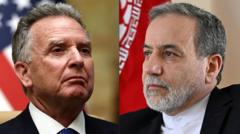
Senior US and Iranian officials are set to engage in direct talks in Oman, aiming to de-escalate tensions amid a crisis marked by military threats and human rights violations in Iran. These discussions follow a US military build-up in the Middle East and are seen as a vital opportunity to negotiate a framework addressing Iran's nuclear programme and regional security concerns.
Last updated: 21 October 2023 (BST)
What’s happening now
As the US and Iranian officials prepare for talks in Oman, the atmosphere remains tense, driven by a series of military postures and stark political disagreements. This meeting is particularly significant given the backdrop of anti-government protests in Iran, which have reportedly resulted in thousands of deaths and widespread arrests. The US has positioned additional troops and naval assets in the region, escalating fears of potential military confrontation.
Key takeaways
- The US is demanding a freeze on Iran's nuclear programme, while Iran insists talks must focus solely on nuclear issues.
- Iran's leaders view this meeting as a crucial opportunity to avert further destabilisation of their regime.
- The meeting represents regional efforts led by Egypt, Turkey, and Qatar to ease US-Iranian tensions.
Timeline: how we got here
The current crisis has evolved rapidly, with key developments including:
- June 2022: US airstrikes on Iran's nuclear facilities escalate tensions.
- September 2022: Nationwide protests erupt in Iran, leading to a violent crackdown.
- October 2023: US military build-up in the Middle East prompts calls for direct talks.
What’s new vs what’s known
New today/this week
The US and Iranian delegations are preparing to meet in Oman after a last-minute change of location, with hopes of reaching a diplomatic resolution amid rising tensions and military threats.
What was already established
Previously, the US has maintained a hardline stance on Iran's nuclear ambitions, demanding broader discussions that include Iran's ballistic missile programme and its support for regional armed groups. Iran, however, has traditionally resisted these terms, insisting on the legitimacy of its nuclear activities.
Impact for the UK
Consumers and households
The ongoing tensions between the US and Iran could impact global oil prices, affecting UK consumers through increased fuel costs and potential inflationary pressures on household budgets.
Businesses and jobs
UK businesses with interests in the Middle East may face supply chain disruptions or increased operational costs if military action escalates. The uncertainty could also deter investment in the region.
Policy and regulation
The UK government is keeping a close watch on these developments, as any significant escalation could lead to calls for increased diplomatic engagement or even sanctions against Iran, which would impact UK businesses operating in the area.
Numbers that matter
- 6,883 confirmed deaths from protests in Iran, with estimates suggesting the number could be much higher.
- Over 50,000 arrests during the recent demonstrations against the Iranian government.
- Iran's stockpile of highly enriched uranium stands at approximately 400 kg (880 lb).
Definitions and jargon buster
- Nuclear programme: Activities related to the development and enrichment of nuclear materials, often a source of international contention.
- Ballistic missiles: Weapons that are launched and follow a ballistic trajectory to deliver one or more payloads to a predetermined target.
- Axis of Resistance: A term used by Iran to describe its alliances with various regional armed groups, including Hezbollah and Hamas.
How to think about the next steps
Near term (0–4 weeks)
Following the talks, immediate reactions from both governments will be critical in determining the future course of relations and whether de-escalation can be achieved.
Medium term (1–6 months)
Watch for potential shifts in Iran's nuclear policy and any changes in US military presence in the region, which could signal a thawing of relations or escalating tensions.
Signals to watch
- Statements from US and Iranian officials regarding the outcomes of the talks.
- Changes in troop deployments in the Middle East.
- Reactions from regional allies, particularly Israel and Gulf states.
Practical guidance
Do
- Stay informed on the developments of the talks and their implications for global markets.
- Consider the potential economic impacts of rising tensions on fuel prices and inflation.
Don’t
- Don’t make assumptions about the stability of the region based solely on the outcome of these discussions.
- Don’t overlook the humanitarian implications of continued unrest in Iran.
Checklist
- Review news from reliable sources about the US-Iran negotiations.
- Monitor oil prices and economic forecasts.
- Assess how geopolitical shifts could impact your business or investments.
Risks, caveats, and uncertainties
The outcome of the talks remains uncertain, with significant gaps between US and Iranian positions on key issues. Additionally, the potential for unexpected developments, such as further protests in Iran or military escalations, could dramatically alter the landscape.
Bottom line
The upcoming discussions between US and Iranian officials represent a crucial juncture in a longstanding conflict, with the potential to either escalate tensions or pave the way for a diplomatic resolution. UK stakeholders should remain vigilant about the implications for regional stability and economic impacts.
FAQs
What are the main issues being discussed in the US-Iran talks?
The US is pushing for discussions on Iran's nuclear programme, ballistic missiles, and regional influence, while Iran insists on limiting the talks to its nuclear activities.
How does the situation in Iran affect the UK?
The tensions could lead to fluctuations in oil prices, impacting UK consumers and businesses dependent on stable energy costs.
What are the potential outcomes of the talks?
Successful negotiations could lead to a de-escalation of military threats and a framework for future discussions, while failure could intensify conflict and instability in the region.