Can Ireland Bounce Back After Paris Defeat?
Published: 2026-02-06 01:00:14 | Category: sport
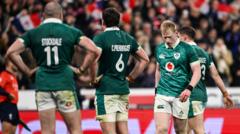
In their opening match of the 2026 Six Nations, Ireland faced a crushing 36-14 defeat to France, a result that highlights ongoing struggles within the team. Despite being considerable underdogs, Ireland's performance was deemed lacking in intent and discipline, raising concerns about their ability to compete at the highest level. This loss marks another setback for a team that has seen better days, as they aim to find solutions ahead of their next match against Italy.
Last updated: 06 February 2026 (BST)
What’s happening now
The defeat to France has left Ireland reeling as they start their Six Nations campaign on a low note. Head coach Andy Farrell's comments about the team's "lack of intent" reflect a broader issue that has persisted since the recent World Cup. With the upcoming match against Italy, Ireland must regroup quickly to avoid further damage to their confidence and standings in the tournament.
Key takeaways
- Ireland lost 36-14 to France in their Six Nations opener.
- The team struggled with discipline and execution, missing 38 tackles.
- Head coach Andy Farrell expressed concerns over the team's lack of intent.
- Injury issues have left Ireland's squad feeling underexposed at the highest level.
- Upcoming match against Italy is crucial for Ireland to regain momentum.
Timeline: how we got here
The trajectory leading to Ireland's defeat has been troubling. Here’s a brief timeline:
- 2023: Ireland exits the World Cup at the quarter-final stage against New Zealand.
- October 2023: Concerns about player depth and injuries begin to surface.
- 2024 Six Nations: Ireland wins against France but struggles in subsequent matches.
- February 2026: Ireland loses 36-14 to France, marking a continuation of poor form.
What’s new vs what’s known
New today/this week
The most recent match exposed significant flaws in Ireland's strategy and execution. The team’s inability to perform under pressure, especially in the first half, raised alarms about their readiness for this year’s tournament. The absence of key players due to injury compounded these issues, further limiting the squad's depth.
What was already established
Prior to this match, Ireland had shown inconsistent form in international competitions. Although they had experienced success in the past, the current squad has struggled against top-tier teams, with a record of only two wins against seven losses in their last nine matches against ranked opponents.
Impact for the UK
Consumers and households
The performance of the national rugby team can have a ripple effect on public morale and consumer sentiment, particularly in regions where rugby is a major part of the culture. A poor showing may lead to decreased viewership and engagement with the sport, impacting local businesses reliant on match-day traffic.
Businesses and jobs
For businesses associated with rugby, such as sports bars and merchandise retailers, Ireland's performance can influence sales and foot traffic. A strong national team often boosts local economies, while a series of losses may deter patronage.
Policy and regulation
With rugby's prominence in the UK, discussions surrounding sports funding and youth engagement can be influenced by the national team’s performance. Poor results may prompt calls for changes in training approaches or funding allocations to develop emerging talent.
Numbers that matter
- 36: Points scored by France in the opener, showcasing their dominance.
- 14: Points scored by Ireland, indicating a significant gap in scoring.
- 38: Missed tackles by Ireland, underlining defensive weaknesses.
- 0: Penalties conceded by France until the 45th minute, demonstrating their discipline and control.
- 5: Losses by 10 points or more in Ireland's last nine matches against top-ranking teams.
Definitions and jargon buster
- Six Nations: An annual rugby union championship contested by England, France, Ireland, Italy, Scotland, and Wales.
- Loose-head prop: A position in rugby union, typically responsible for scrummaging, lifting in line-outs, and providing stability in the front row.
- Scrum: A method of restarting play in rugby, involving players packing closely together to gain possession of the ball.
How to think about the next steps
Near term (0–4 weeks)
Ireland needs to focus on immediate improvements before their next match against Italy. This includes addressing defensive strategies and improving teamwork to regain confidence.
Medium term (1–6 months)
As the tournament progresses, Ireland must evaluate their squad depth and consider integrating more players to enhance competition for places. Building resilience against injuries will be key for long-term success.
Signals to watch
- Performance metrics in upcoming matches, particularly against Italy.
- Injury updates on key players and their impact on team selection.
- Defensive and offensive statistics, particularly missed tackles and scoring rates.
Practical guidance
Do
- Focus on improving defensive techniques to reduce missed tackles.
- Encourage a team culture that promotes resilience and adaptability.
- Regularly assess player fitness and readiness to ensure the best squad is fielded.
Don’t
- Ignore the importance of squad depth in high-stakes matches.
- Overlook the need for strategic adjustments when facing different opponents.
- Allow individual player performance to overshadow team objectives.
Checklist
- Review game footage to identify areas for improvement.
- Conduct team meetings to foster open communication about strategies.
- Monitor player fitness levels regularly to adapt training schedules.
- Engage with fans to maintain morale and support.
- Set clear performance goals for the next match against Italy.
Risks, caveats, and uncertainties
The ongoing injury crisis poses significant risks for Ireland's performance throughout the Six Nations. Moreover, the reliance on a few star players may limit the team's adaptability against stronger opponents. As the situation develops, it will be crucial to monitor how the coaching staff addresses these challenges while integrating new players into the squad.
Bottom line
The defeat against France signals a critical juncture for Ireland as they seek to regain form in the 2026 Six Nations. With upcoming matches on the horizon, the team must reflect on their performance, strengthen their strategies, and foster a deeper squad to navigate the challenges ahead successfully.
FAQs
What went wrong for Ireland in their match against France?
The Irish team struggled with defensive discipline and execution, leading to 38 missed tackles and a significant point deficit.
How does this defeat impact Ireland's chances in the Six Nations?
This loss puts Ireland under pressure to perform in upcoming matches, particularly against Italy, to regain momentum and confidence in the tournament.
What are the implications of injuries for Ireland's rugby squad?
Injuries have severely limited Ireland's squad depth, affecting their performance and ability to compete effectively against top-tier teams.