Are Iran's Students Igniting a New Wave of Anti-Government Protests?
Published: 2026-02-21 21:00:08 | Category: world
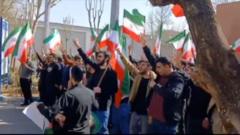
The recent anti-government protests by students at several universities in Iran mark a significant resurgence of dissent against the regime, following a deadly crackdown last month. Demonstrators have taken to the streets in cities like Tehran and Mashhad, honouring those who lost their lives during earlier unrest. As tensions escalate, particularly with increasing military presence from the US, the situation remains precarious, raising concerns about potential military action and the future of Iran's nuclear ambitions.
Last updated: 05 October 2023 (BST)
What’s happening now
Students across Iranian universities are staging protests, with significant gatherings reported at the Sharif University of Technology in Tehran and in Mashhad. These demonstrations are reportedly the largest since the government's violent response to protests last month, which led to a concerning loss of life. The protests serve both as a tribute to those who died and as a rallying cry for ongoing resistance against the government.
Key takeaways
- Protests are taking place at multiple universities, notably in Tehran and Mashhad.
- Demonstrators are honouring the victims of last month’s crackdown, with significant casualties reported.
- The US is reportedly considering military action against Iran amid rising tensions over nuclear development.
Timeline: how we got here
The current protests and tensions stem from a series of events that have unfolded over recent months:
- January 2023: Reports of at least 6,159 deaths linked to protests, including many civilians.
- Late September 2023: A severe crackdown by Iranian authorities on demonstrations, resulting in significant casualties.
- October 2023: Protests erupt at Iranian universities as students demand justice and reform.
What’s new vs what’s known
New today/this week
Protesters have mobilised at various universities, with verified footage showing significant numbers marching peacefully. Calls for more demonstrations indicate a persistent desire for change among students.
What was already established
Prior to these protests, the Iranian government had faced criticism for its handling of dissent and for alleged human rights violations, including the deaths of thousands during protests in recent months. The international community, particularly the US and its allies, have expressed concerns over Iran's potential nuclear capabilities.
Impact for the UK
Consumers and households
The unrest in Iran may have indirect effects on UK consumers, particularly if tensions escalate into military conflict. Energy prices could be impacted, especially given Iran's role in global oil supply.
Businesses and jobs
UK businesses with interests in Iran may face increased risk due to potential sanctions or instability. The ongoing protests could also affect supply chains that rely on Iranian resources.
Policy and regulation
The UK government may need to reassess its diplomatic stance regarding Iran, particularly in light of increasing calls for a firmer approach against human rights abuses and nuclear proliferation.
Numbers that matter
- 6,159: Confirmed deaths related to recent protests, including over 5,800 protesters.
- 3,100: Iranian authorities' claim of deaths, primarily among security personnel.
- 17,000: Additional reported deaths under investigation by the Human Rights Activists News Agency (Hrana).
Definitions and jargon buster
- Protests: Public demonstrations expressing dissent against government policies or actions.
- Nuclear proliferation: The spread of nuclear weapons and related technology, which is a major concern for the US and its allies regarding Iran.
How to think about the next steps
Near term (0–4 weeks)
Continued protests are expected as students and citizens express their dissatisfaction. The Iranian government may respond with further crackdowns, raising the risk of violence.
Medium term (1–6 months)
The situation may escalate if diplomatic solutions are not found, particularly if the US pursues military action or if protests lead to significant political change in Iran.
Signals to watch
- International negotiations regarding Iran's nuclear programme.
- Casualty figures and reports from protests.
- Statements from US and Iranian officials regarding military actions or agreements.
Practical guidance
Do
- Stay informed about the political situation in Iran and any potential impacts on international relations.
- Support human rights organisations that monitor developments in Iran.
Don’t
- Assume the situation in Iran is static; it is rapidly evolving.
- Engage in speculation about military actions without credible information.
Checklist
- Monitor news sources for updates on protests and government responses.
- Understand the implications of US-Iran relations on global economics.
- Follow international human rights reports related to Iran.
Risks, caveats, and uncertainties
The situation in Iran is fluid, and exact figures regarding casualties and the scale of protests may vary. Disinformation campaigns from both pro- and anti-government factions complicate the narrative. The international response, including potential military action, remains uncertain and could change rapidly based on diplomatic developments or escalations in protests.
Bottom line
The resurgence of student protests in Iran signals a critical moment for the regime amidst ongoing international scrutiny. As the situation develops, the implications for the UK and global community will hinge on diplomatic negotiations and the potential for military action. Observing these dynamics is essential for understanding future trends in international relations and human rights in Iran.
FAQs
What are the main reasons for the protests in Iran?
The protests in Iran are primarily driven by dissatisfaction with government policies, human rights violations, and the heavy-handed crackdown on dissent, particularly after recent violent incidents.
How has the international community responded to the protests?
The international community, particularly the US, has voiced concerns and expressed support for the protesters, while also considering military options amid rising tensions over Iran's nuclear programme.
What is the current situation regarding Iran's nuclear programme?
Negotiations are ongoing, but there are significant concerns that Iran may be moving towards developing nuclear weapons, which the Iranian government denies.