Could North Korea and the US Finally Get Along? Insights from Kim Jong Un
Published: 2026-02-26 07:00:22 | Category: world
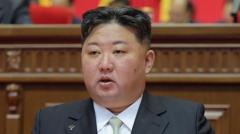
North Korean leader Kim Jong Un has expressed a firm commitment to expanding the country's nuclear arsenal and its operational range, insisting that the United States must recognise North Korea as a nuclear power. During a recent party congress in Pyongyang, Kim suggested that peaceful relations with the US are possible, provided Washington respects Pyongyang's nuclear position. However, he dismissed any hopes for improved ties with South Korea, labelling it the North's "most hostile entity." His statements signal a strategic pivot towards fostering a direct relationship with the US, independent of South Korea's influence.
Last updated: 20 October 2023 (BST)
What’s happening now
In a significant address during the Ninth Congress of the Workers' Party of Korea, Kim Jong Un outlined his vision for North Korea's nuclear future. He stated that the nation plans to enhance its nuclear capabilities, interpreting this as a deterrent against perceived threats, particularly from the US and South Korea. Kim's rhetoric denotes a clear intention to solidify North Korea's status as a nuclear state, which he believes should be acknowledged by the international community, particularly the United States. His remarks come at a time when tensions remain high, yet he leaves open the possibility for a different kind of engagement with the US.
Key takeaways
- Kim Jong Un calls for the expansion of North Korea's nuclear arsenal and operational capabilities.
- He insists that the US must accept North Korea as a nuclear power for any diplomatic engagement.
- Relations with South Korea are deemed irreparable by Kim, who labels them as the North's "most hostile entity."
- The North Korean regime continues to develop its nuclear program despite international sanctions.
- Kim's daughter, Ju Ae, has been mentioned as a potential heir, indicating a focus on dynastic continuity.
Timeline: how we got here
The following timeline highlights key events related to North Korea's nuclear ambitions and international relations:
- 2003: North Korea's nuclear programme emerges as a significant global concern.
- 2017: US President Trump labels North Korea a rogue state in a global security roadmap.
- 2019: The last direct talks between Kim Jong Un and Trump occur, focusing on denuclearisation.
- November 2022: Kim calls for a "limitless" expansion of North Korea's nuclear programme.
- October 2023: Kim declares his intent to expand North Korea's nuclear capabilities at the Workers' Party Congress.
What’s new vs what’s known
New today/this week
Kim's recent statements mark a clear and aggressive stance towards nuclear expansion, emphasising that North Korea's nuclear capabilities are a permanent fixture. He has indicated that the future of US-North Korea relations hinges on the US's acceptance of this reality.
What was already established
Historically, North Korea has maintained a consistent narrative regarding its nuclear ambitions, with prior leaders also insisting on the importance of nuclear deterrence. The regime's long-standing goal has been to achieve recognition as a nuclear power, which it argues is essential for its national security.
Impact for the UK
Consumers and households
The UK's exposure to North Korean developments primarily revolves around geopolitical stability and global security. Increased tensions could affect global markets, particularly in sectors tied to energy and defence. Consumers may not feel immediate changes, but increased military posturing can lead to fluctuations in international trade and economic forecasts.
Businesses and jobs
For UK businesses, particularly in technology and defence, the ongoing situation may necessitate shifts in strategy to address potential supply chain disruptions. Heightened tensions could lead to increased government spending on defence, influencing job creation in related sectors.
Policy and regulation
The UK government may need to reassess its foreign policy towards North Korea, balancing diplomatic engagement with necessary sanctions. Upcoming international discussions, especially within NATO and the UN, will likely focus on how to respond to North Korea's nuclear ambitions.
Numbers that matter
- 50: Estimated number of assembled nuclear warheads North Korea possesses according to SIPRI.
- 40: Additional nuclear warheads North Korea could potentially produce with existing fissile material.
- 1: Number of times Kim Jong Un emphasised the need for nuclear expansion in the recent congress.
- 2019: Last year direct talks between Kim and Trump took place, indicating a significant lapse in diplomatic engagement.
- 5: New nuclear projects highlighted by Kim, focusing on increasing operational capacity.
Definitions and jargon buster
- Nuclear Deterrence: A military strategy aimed at preventing an adversary from attacking by the threat of retaliatory nuclear strike.
- Denuclearisation: The process of reducing or eliminating nuclear weapons from a particular state or region.
- SIPRI: Stockholm International Peace Research Institute, an independent think tank that provides data and analysis on global security and arms control.
How to think about the next steps
Near term (0–4 weeks)
Expect continued rhetoric from North Korea regarding its nuclear capabilities. The US may respond with diplomatic communications aimed at reaffirming its stance against nuclear proliferation.
Medium term (1–6 months)
As international tensions rise, anticipate a potential increase in military exercises in the region, both from North Korea and the US, along with discussions in multilateral forums.
Signals to watch
- Statements from US officials regarding North Korea's nuclear programme.
- Changes in military preparedness or exercises in the Korean Peninsula.
- Reactions from South Korea and China regarding North Korea's aggressive stance.
Practical guidance
Do
- Stay informed about developments in North Korea through reliable news sources.
- Monitor government advisories regarding international travel and safety.
- Engage in discussions about the implications of nuclear proliferation for global security.
Don’t
- Assume immediate changes in daily life due to North Korea's statements.
- Neglect the importance of diplomatic channels in resolving international tensions.
- Overlook the impact of global markets reacting to geopolitical events.
Checklist
- Review personal and business preparedness for potential geopolitical disruptions.
- Stay updated on UK government policy regarding North Korea.
- Consider the broader implications of nuclear weapons on international peace.
- Engage with community discussions on nuclear policy and security.
- Be aware of financial and market shifts related to global security issues.
Risks, caveats, and uncertainties
While Kim's statements indicate a definitive stance on nuclear expansion, the actual military capabilities of North Korea remain somewhat opaque due to the regime's secrecy. Moreover, international sanctions may impact the pace and extent of their nuclear programme's growth. The situation is further complicated by varying interpretations of the geopolitical landscape, particularly concerning US-North Korea relations and the role of South Korea.
Bottom line
Kim Jong Un's recent declarations signal a stark continuation of North Korea's nuclear ambitions, with implications for international relations, particularly with the US and South Korea. The UK's interests in global security may require a reevaluation of policy towards North Korea as the situation unfolds. Continuous monitoring of developments is essential for understanding the broader impacts on regional stability.
FAQs
What is Kim Jong Un's stance on nuclear weapons?
Kim Jong Un has declared an intent to expand North Korea's nuclear arsenal and insists that the US must recognise North Korea as a nuclear power for any potential diplomatic engagement.
How does North Korea view South Korea?
North Korea considers South Korea its "most hostile entity," with Kim stating that there is no possibility of reconciliation unless South Korea renounces its geopolitical ties to the North.
What impact does this have on UK security?
The developments in North Korea could influence global security dynamics, potentially affecting UK interests, particularly in terms of economic stability and international relations.